MCP server · Health and learning
Fitbit MCP server
by partymola
Lets your AI read your Fitbit data like steps, sleep, heart rate and weight, and spot trends over time.
This is a small helper that connects your AI assistant to your Fitbit account. Once it is set up, you can ask your AI things like how you slept this week or whether your step count is going up, and it will look up the numbers for you. It is handy if you wear a Fitbit and like keeping an eye on your health without digging through the app yourself.
What is an MCP server? The 30-second version
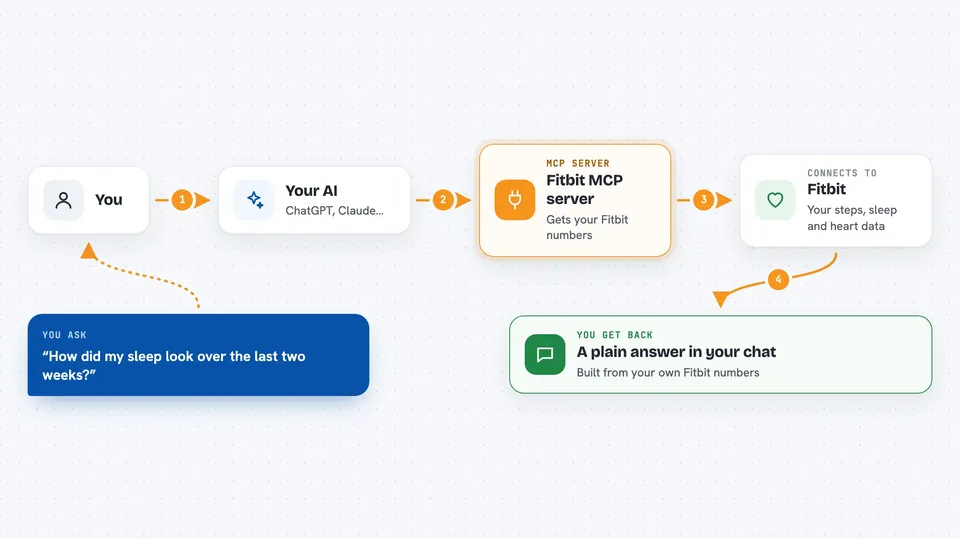
On its own, your AI can only chat with you. It cannot see your Fitbit account or your health numbers. An MCP server is a small helper program that gives your AI a new skill, and this one gives it a connection to Fitbit. So when you ask about your sleep or your steps, your AI asks this helper, the helper fetches the data, and you get an answer in the chat.
What this MCP server does
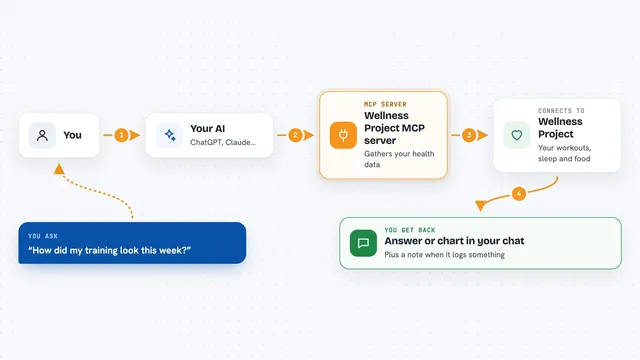
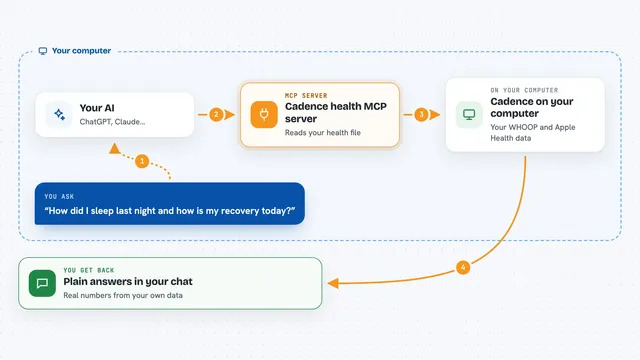
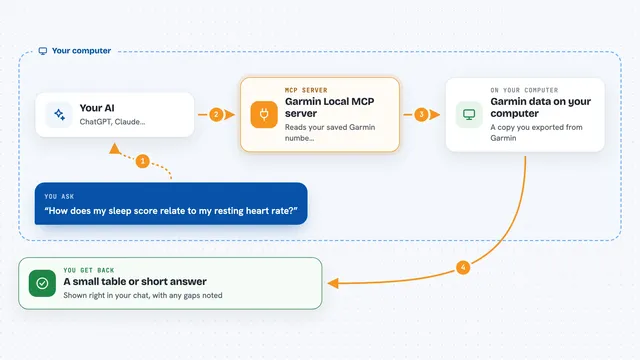
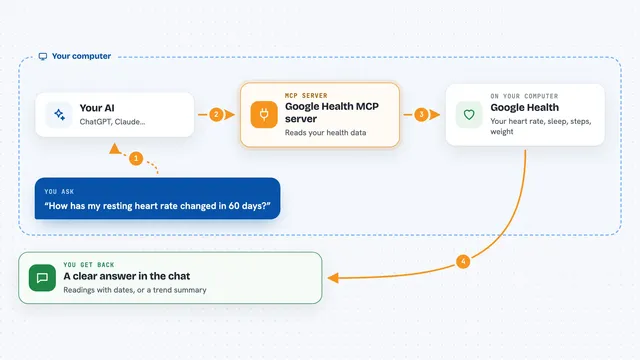
You ask your AI a question about your Fitbit data, like how many steps you took last month. Your AI passes that request to this helper program. The helper talks to Fitbit, or reads a copy of your data it saved on your computer earlier, and pulls out the numbers you asked for. Then it hands those numbers back to your AI, which turns them into a normal answer for you. After the first sync, most questions are answered from that saved copy, so they come back fast.
 Click to zoom
What you can do with it
- Check your resting heart rate and heart rate zones over any date range
- See your steps, calories, distance and active minutes day by day
- Review your sleep duration, efficiency and sleep stages
- Look up your weight, BMI and body fat percentage
- Track blood oxygen, heart rate variability and breathing rate
- Compare this month to last month with a trend summary
- List your logged exercises like runs, walks or cycling sessions
Try asking your AI
- “How did my sleep look over the last two weeks?”
- “Compare my average steps this month to last month”
- “Show me my resting heart rate for the past 30 days”
- “What were my cycling sessions in March?”
What it gives back to you
You get back plain answers in the chat, built from your own Fitbit numbers. Depending on what you ask, that might be a list of days with steps or sleep hours, a short summary of averages, or a comparison between two periods. Trend questions come back as grouped averages, for example weekly or monthly. If you ask it to sync, it quietly updates the saved copy and tells you what it pulled in.
Before you start
What you need
- Python 3.13 or newer installed on your computer
- A Fitbit account and a personal app registered on the Fitbit developer site (the README walks you through it)
- An MCP client like Claude Code to connect it to
Good to know
It reads your personal health data and stores a copy of it on your computer, so keep that file private and back it up before the Fitbit shutdown if you want to keep the numbers.
Install it with your AI
Add Fitbit MCP server to your AI, no technical skills needed
You don't install anything by hand. You copy one prompt, paste it into an AI that can work on your computer, and it checks, installs and connects the server for you, asking you when it needs something.
Sign in to get the install prompt
Members get a ready-made prompt that lets the Claude desktop app check Fitbit MCP server, install it and connect it for them, step by step. You don't need any technical skills: you copy, paste and answer a few questions. Your connected AI can also find and install any of the 4,361 MCP servers here for you.
Who it's for
Fitbit wearers who use an AI assistant and want to ask questions about their own health data in plain language.