
AI news ·
732nd Air Mobility Squadron uses AI to build Arctic-specific tabletop exercise at JBER
An Alaska Air Force squadron used AI to run a 179-day Arctic surge simulation, exposing logistics gaps before they hit real missions. The exercise put 50 participants through 70 daily aircraft movements, equipment failures, and resource shortfalls.
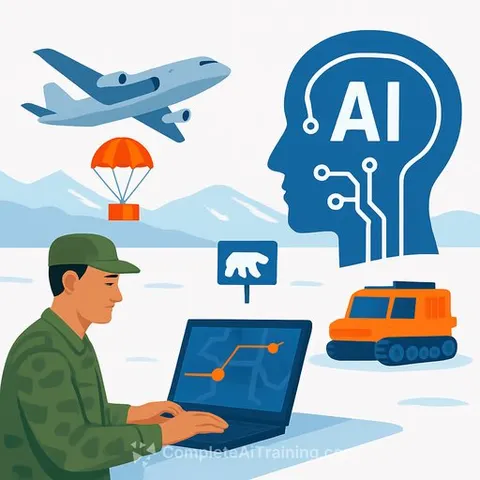
Air Force Squadron Uses AI to Test Arctic Logistics Operations
The 732nd Air Mobility Squadron at Joint Base Elmendorf-Richardson, Alaska, recently ran a tabletop exercise called ARCTIC BRIDGE that used artificial intelligence to simulate surge operations in the Arctic-a proof-of-concept test designed to expose operational gaps before they occur in real-world missions.
The exercise placed 50 participants in a simulated 179-day surge scenario with up to 70 aircraft movements per day. Participants worked through realistic challenges: broken equipment, maintenance delays, and resource shortfalls that required coordination across multiple teams.
The squadron built the exercise using Gemini through GenAI, a Department of War platform released in December 2025 that processes Controlled Unclassified Information securely. This allowed the 732 AMS to create scenarios specific to Arctic operations rather than generic logistics training.
"We need to prepare for an uptick in missions and for the ramp to be inundated with aircraft," said Lt. Col. Joseph Henn, 732 AMS commander. "My goal is to develop and promote creative thinking and have our team come up with solutions on how we would respond to a surge of this magnitude."
What the Exercise Revealed
The tabletop format forced junior Airmen and noncommissioned officers to see connections they normally miss. Staff Sgt. Christopher Freehoff, an aerospace maintenance craftsman, said the exercise showed him "how much crossover exists between us and the transportation flight, and how working together can benefit both sides."
Staff Sgt. Jamis Lopez, a fleet services supervisor new to the role, found the scenarios realistic enough to apply his knowledge immediately. He credited the exercise with deepening his understanding of procedures and emphasizing teamwork under pressure.
Col. Joshua Holaday, 715th Air Mobility Operations Group commander, said the exercise identified gaps and improved coordination across the installation. "It gives us the opportunity to identify gaps, improve coordination across the installation and develop solutions now, during peacetime, so we are better prepared for future operations," Holaday said.
Why This Matters for Operations Teams
Tabletop exercises that include AI-generated scenarios allow operations teams to stress-test their processes without deploying actual resources. The 732 AMS can now take the lessons back to individual sections and strengthen how they respond to real surges.
Other Air Mobility Teams can adapt this model to their own operating environments. The approach-using AI to create tailored, factual scenarios-scales across different locations and mission types.
For operations professionals managing resource allocation and contingency planning, this method offers a practical way to prepare teams for unfamiliar scenarios before they become emergencies. Learn more about AI for Operations and how other teams are using these tools.