
AI news ·
Academy bars AI-generated actors and scripts from Oscar eligibility
The Academy has ruled that AI-generated performances and screenplays are ineligible for Oscar consideration. Scripts must be human-authored, and actors must be credited, human, and consenting.
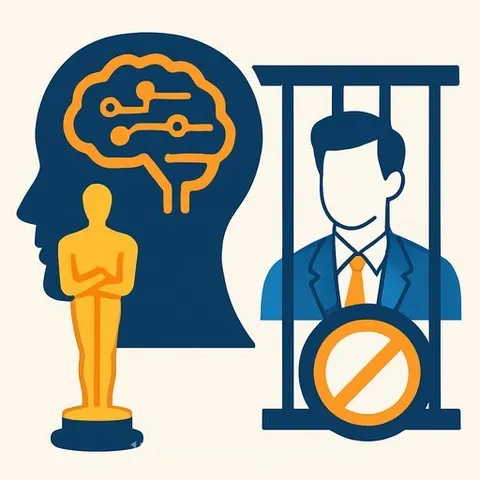
Academy Bans AI-Generated Actors and Scripts From Oscar Consideration
The Academy of Motion Picture Arts and Sciences has ruled that AI-generated performances and screenplays are ineligible for Oscar awards. The new eligibility rules, released Friday, require that all acting performances be "credited in the film's legal billing and demonstrably performed by humans with their consent." Screenplays must be "human-authored" to qualify.
The decision directly affects filmmakers and studios. An independent film featuring an AI-generated version of actor Val Kilmer will not qualify for acting awards under the new rules. Similarly, scripts written with significant AI assistance cannot be submitted for consideration.
What the Rules Require
Filmmakers must now meet specific requirements to submit work for Oscar consideration:
- Actors must appear in the film's official legal billing
- Performances must be proven as human-created
- Performers must provide documented consent
- Screenplays must be written by humans
- Filmmakers may be asked to disclose AI usage during submission
The Academy reserves the right to request documentation proving human involvement. This includes credits, contracts, and production notes. Non-compliance could result in disqualification, though the Academy has not yet specified penalties.
Why Now
The decision responds to rapid changes in the industry. AI-generated actors like "Tilly Norwood" have gained media attention. Meanwhile, the 2023 actors' and writers' strikes highlighted deep concerns about job displacement and creative ownership.
During those strikes, AI was a central issue. Writers and performers pushed back against studios using AI to replace human work. The new Oscar rules reflect those concerns.
What Stays Allowed
The rules focus narrowly on performances and scripts. Directors using AI for visual effects, color grading, or other technical work are unaffected. AI-assisted brainstorming for screenwriters may be acceptable, provided the final script is primarily human-authored.
This distinction matters. The Academy is protecting jobs in acting and screenwriting while allowing technology that enhances production.
Enforcement Challenges
Proving human authorship presents real difficulties. AI-generated dialogue edited by humans blurs the line between machine and human work. The Academy may need to define specific thresholds for what counts as "primarily human-authored."
Some filmmakers may attempt to hide AI involvement. The Academy will need robust verification methods to enforce the rules consistently.
Broader Industry Impact
Other awards bodies are adopting similar rules. Writers' groups have declared AI-generated work ineligible for their prizes. Publishers have pulled novels suspected of AI authorship.
The Oscars' decision may set a precedent globally. Countries like France and India are already discussing AI regulation in film. Other award ceremonies may adopt similar standards.
What Creatives Should Know
For screenwriters, the rules provide clear boundaries. You can use AI tools for research, outlining, or brainstorming, but the final script must be your work. The Academy can request documentation of your authorship.
For actors, the rules protect your eligibility and consent. Your performance must be credited and created with your explicit agreement. AI deepfakes or synthetic performances of your likeness cannot substitute for your work.
For directors and producers, transparency is essential. If you use any AI in performance or screenplay creation, document the human involvement carefully. Disclose AI usage when submitting work.
Learn more about how generative video technology works and how it affects creative industries. Understanding the technology helps you navigate these new regulations.
Mixed Reactions
Actors and writers have largely supported the rules. They see them as protecting jobs and creative ownership. Some filmmakers worry the rules may stifle experimentation with new tools.
Industry experts say the rules are necessary. One expert said, "The Oscars are about celebrating human achievement. AI cannot replace that." Another noted, "These rules provide clarity for filmmakers navigating new technology."
The rules take effect immediately for upcoming submissions. Specific submission deadlines depend on the awards cycle.
For creatives working in film, these rules reshape how you approach your craft. AI for Creatives tools can assist your work, but human authorship remains the requirement for industry recognition.