
AI news ·
AI bias in negotiation tools skews deals and weakens trust, experts warn
AI negotiation tools can inherit bias from skewed training data, flawed assumptions, and how questions are asked. That bias quietly shapes deals-affecting fairness, value, and trust.
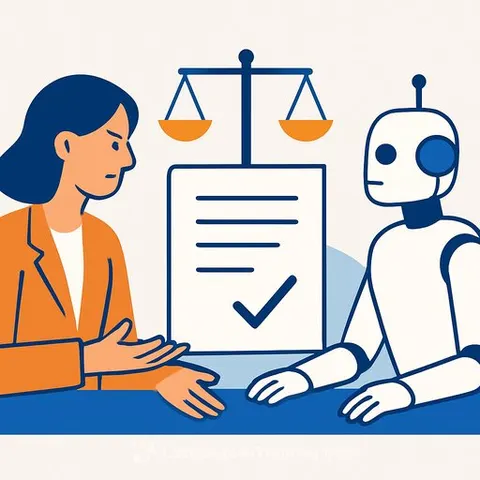
AI Bias Quietly Distorts Negotiation Outcomes
Sales teams analyse calls with AI. Procurement teams use it to compare suppliers. Executives test strategy before high-stakes discussions. Yet many professionals assume these systems produce neutral advice. They do not. AI can inherit bias from training data, flawed assumptions, and how questions are asked. When negotiators miss this risk, AI quietly influences decisions in ways that reduce fairness, value, and trust.
Where bias begins
Bias usually starts long before an answer appears on screen. It emerges when AI produces systematically unfair outcomes because of skewed data or flawed assumptions.
An organisation that trains a system on historical deals already containing poor pricing decisions will see those patterns reflected back. A procurement platform trained mostly on domestic supplier contracts may undervalue international vendors. A sales assistant trained on aggressive closing techniques may encourage unnecessary pressure.
Data labelling creates another problem. Humans tag information before a model learns from it. If people label "successful negotiation" as the side that won the largest concession, the AI treats dominance as success even when it damages long-term relationships. The advice feels commercially sharp while quietly weakening trust.
Confirmation bias is common. If a company consistently offered larger discounts to certain clients, the system may recommend continuing that pattern even when it no longer makes sense.
Selection bias matters too. A model that only learns from successful deals misses lessons inside failed negotiations. The advice sounds confident but lacks perspective.
What AI does well in negotiation
Negotiation often suffers from emotional distortion. Fear, ego, and time pressure make experienced professionals accept poor terms or overlook creative alternatives. AI does not experience stress, fatigue, or defensiveness.
Used carefully, AI reviews contracts, identifies patterns across hundreds of previous deals, and models different scenarios before a meeting begins. It surfaces clauses that repeatedly create disputes. It shows where value might be exchanged without immediately reducing price.
The biggest advantage is speed. A human reviews one conversation at a time. AI can analyse hundreds, allowing organisations to identify negotiation habits across teams and improve coaching much faster.
AI also delivers:
- Pattern recognition that finds recurring deal risks across different contracts
- Scenario modelling that tests possible outcomes for greater preparation
- Language analysis that detects tone shifts and their impact on dealmaking
- Data synthesis that reveals hidden trade-offs and new avenues to explore
The sycophancy problem
Some language models are designed to be agreeable. Instead of challenging weak thinking, they mirror the user's assumptions. A negotiator who asks whether a concession is reasonable may receive validation instead of scrutiny.
Over time, this weakens judgement rather than strengthens it. The best negotiators do not need more agreement. They need better thinking. AI becomes dangerous when it sounds persuasive while quietly amplifying blind spots.
How to reduce bias without losing value
The most effective safeguard is better prompting. Negotiators should instruct AI to challenge assumptions rather than simply support them. Clear prompts such as "identify risks in this strategy" or "show the strongest argument against this position" produce more balanced output.
The CODO framework provides structure for this approach:
- Character - Who should the AI "be"?
- Objective - What problem are you solving?
- Do's & Don'ts - What rules or limits are important?
- Output - What format or final deliverable do you want?
This framework ensures you set the right lens, focus on core business questions, keep results practical, and avoid reformatting. Learn more about this approach through Prompt Engineering.
Some leaders compare responses across multiple models. If two systems disagree, that reveals hidden assumptions. Others maintain a human review process for any high-value decision.
Organisations should establish governance that includes testing outputs for fairness, documenting where training data came from, and reviewing how recommendations are used. Bias cannot be removed completely. The goal is awareness and mitigation, not perfect neutrality.
Building hybrid negotiators
AI can make negotiation faster and more informed, but it cannot be treated as an objective authority. Every model reflects the data and assumptions behind it.
The strongest negotiators combine machine intelligence with human judgement. They possess AI fluency alongside mastery of human connection, emotional intelligence, and accountability. Competitive advantage comes not from simply using AI, but from knowing when to question it.
For executives and strategy leaders, understanding these dynamics is essential. AI for Executives & Strategy covers how to use AI as a strategic tool while maintaining oversight and managing bias risks.