
AI news ·
AI forces healthcare cybersecurity plans to factor in automated responses and anomaly detection
AI-driven cyberattacks now move at machine speed, forcing healthcare security teams to update incident response plans with automation, analyst feedback loops, and anomaly detection.
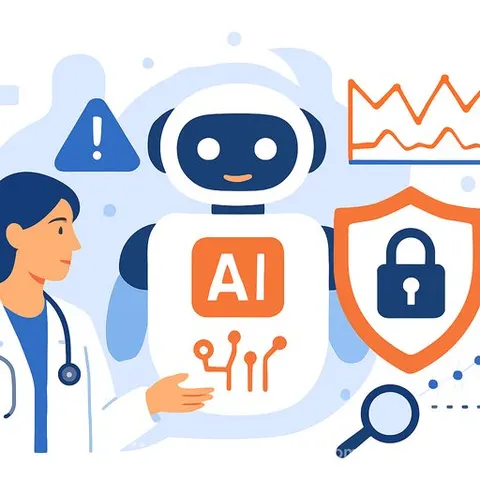
AI-driven cyberattacks now unfold at machine speed, compressing incident response timelines in ways traditional plans never anticipated. For healthcare organizations, the stakes are not just data loss but disrupted clinical operations and compromised patient care. Security teams need to update their incident response frameworks with three additions: automation, analyst feedback loops, and anomaly detection.
Automation with clear boundaries
Many healthcare IT administrators have avoided automated responses, particularly in environments where false positives carry clinical risk. That caution no longer works. Human response times cannot match the velocity of AI-powered lateral movement and privilege escalation.
Incident response plans should define exactly when automated actions kick in. The key is setting boundaries: under what conditions can an account be disabled, an endpoint quarantined, or a server blocked at the firewall? Plans must list which attack types trigger immediate automated responses. AI security tools now offer more nuanced risk assessment than older systems, giving healthcare leaders better guardrails for automation.
Keeping analysts in the loop
Letting AI agents respond does not mean accepting their recommendations without scrutiny. High-impact actions still require human sign-off. Incident response plans should establish a dual path: low-risk actions execute automatically and get reviewed later, while high-risk moves - isolating network segments, disconnecting federated trust, revoking administrative credentials - wait for analyst validation.
Feedback matters just as much as approvals. Teams need processes to tell AI tools when recommendations are wrong. "Every now and then, you must tell your tools, 'Your recommendation was erroneous or unsupported,'" the source notes. Building training feedback into the incident response plan ensures lessons are not lost. For teams building these capabilities, structured training like AI for Cybersecurity Analysts can help bridge the gap between traditional SOC workflows and AI-augmented defense.
Anomaly detection as a primary indicator
Intrusion prevention systems that rely on known indicators of compromise are no longer enough. AI-driven attacks generate novel patterns that signature-based detection misses. The strongest defense is anomaly detection: setting AI loose on telemetry from networks, middleboxes, and servers to flag behavior that deviates from baseline.
Healthcare organizations should add AI-driven anomaly detection to their incident response plans as a primary indicator of attack or compromise. This shifts the security posture from reactive pattern matching to proactive behavioral analysis - catching attacks that have never been seen before.
Why this matters for healthcare professionals
Healthcare IT teams operate under constraints most industries do not face. Taking a server offline for quarantine can delay patient results. Blocking an account can interrupt care coordination. That is precisely why updating incident response plans now matters: AI-speed attacks will force these decisions in milliseconds, not hours. Defining automation boundaries, analyst checkpoints, and anomaly detection triggers before an incident occurs is the difference between a controlled response and chaos during a live attack. For healthcare-specific AI applications beyond security, resources like AI for Healthcare offer broader context on how these tools integrate into clinical and operational environments.