
AI news ·
AI in healthcare coding requires human oversight and transparency
AI-assisted coding can inflate code complexity and expose hospitals to audit risk, claim denials, and False Claims Act liability. A recent fact sheet mandates human oversight, requiring a qualified coder to validate every AI-generated code before submission.
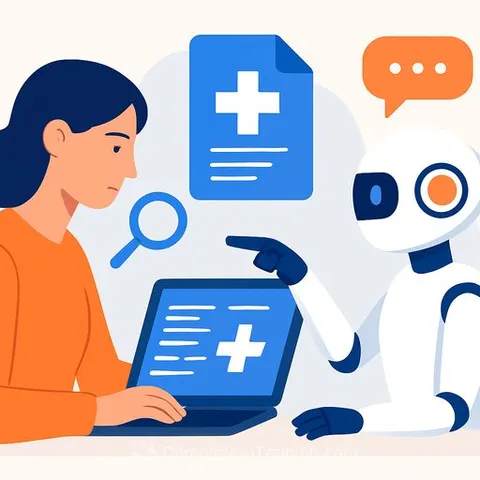
Hospitals and health systems are adopting AI tools to generate diagnosis and procedure codes from clinical documentation. The shift promises faster workflows and lower administrative burdens, but it also raises direct compliance risks tied to coding intensity - the level of detail and specificity captured in each code.
AI-assisted coding can inflate code complexity, whether through subtle model drift or overfitting to reimbursement patterns. Without proper guardrails, organizations face audit exposure, claim denials, and potential False Claims Act liability. The core tension is straightforward: automation speeds things up, but the final codes must still reflect what actually happened to the patient.
What the new guidance emphasizes
A recent fact sheet on AI and coding intensity outlines four principles for responsible use. First, human oversight is non-negotiable. A qualified coder or clinician must review and validate every AI-generated code before submission. The tool suggests - the human decides.
Second, transparency requires disclosing AI involvement to relevant stakeholders, including payers and auditors where appropriate. Third, accuracy demands regular testing and monitoring of the AI system to confirm it produces reliable, compliant results across patient populations. Fourth, compliance means all AI-aided coding practices must adhere to existing laws and regulations - no carve-outs exist for machine-generated codes.
These principles mirror broader industry consensus that emerged after early coding AI deployments produced patterns of upcoding. Several health systems have since built internal review boards specifically for AI coding tools.
Where the risk concentrates
Coding intensity becomes problematic when AI systems learn to favor higher-paying codes without clinical justification. A system trained on historical claims data may associate certain documentation phrases with more specific - and more lucrative - codes, even when the documentation does not fully support them. This is not necessarily a design flaw; it is a predictable outcome of optimizing for completeness.
The fix is not to abandon the technology. It is to build review workflows that treat AI output as a draft, not a final product. Organizations that skip this step tend to find the problems during an audit rather than before one.
For professionals working in AI for Healthcare, the fact sheet reinforces what compliance teams have been saying for two years: the tool is only as safe as the review process around it. Coders and billers who understand both the clinical context and the AI's limitations become the critical safety net.
Why this matters for healthcare professionals
Medical coders, billers, and revenue cycle managers carry direct responsibility for what gets submitted, regardless of whether AI touched the claim. If an AI-generated code overstates what the documentation supports, the human sign-off makes it the organization's problem - not the vendor's. Training paths like AI for Medical Billers are emerging to help these professionals evaluate AI output critically rather than trust it by default.
The practical takeaway: every AI coding deployment needs a documented audit trail showing human review occurred. Without that, organizations are betting their compliance posture on a model they did not build and may not fully understand.