
AI news ·
AI makes employee performance easier to measure, but pay decisions still require human judgment
AI tools can now track employee performance in real time, pulling data from collaboration platforms and goal systems. But deciding what that performance is worth still requires human judgment, context, and clear communication.
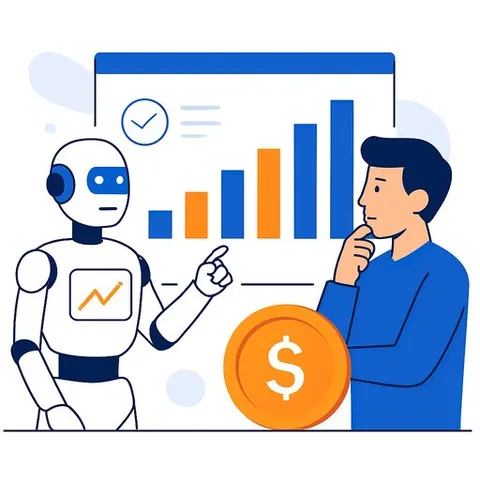
AI Makes Performance Measurable. Deciding What It's Worth Remains Human Work
Organizations can now measure employee performance in real time, drawing on data from collaboration tools, goal tracking systems, and work outputs that were once difficult to capture. This shift away from periodic reviews and manager memory is reshaping how companies approach pay-for-performance models.
But better data alone doesn't guarantee better decisions. As AI moves into performance management and compensation processes, the real challenge lies in how organizations interpret, communicate, and ultimately use that information to set pay.
What's changing in performance measurement
AI is moving performance assessment beyond manager observations and self-reporting toward direct signals pulled from the work itself. Systems can track progress toward goals in real time, surface contributions that might otherwise go unnoticed, and identify patterns across weeks or months of work.
The technology also handles administrative overhead. AI can summarize feedback and draft performance reviews, freeing managers to focus on interpretation and conversation rather than documentation.
This added visibility changes the employee experience too. Instead of waiting for annual reviews, workers get continuous feedback on how they're performing and where they need to improve. Research cited by Corinne Post, the Fred J. Springer Endowed Chair in Business Leadership at Villanova School of Business, found that employees trust AI more than their human managers for performance assessment, partly because it draws on larger, more continuous datasets and can reduce bias.
Still, many organizations are experimenting with AI in performance measurement without fully integrating it into compensation decisions. The challenge is keeping focus on outcomes that matter to the business, not just efficiency gains.
The pay question remains unsettled
AI can strengthen the connection between performance and pay by making that relationship clearer. When employees see real-time feedback on how their work translates to results, and understand how those results influence compensation, motivation stays intact.
That transparency matters. Post points out that unclear pay-for-performance systems erode motivation quickly. AI can help close that gap by showing employees exactly how their efforts connect to outcomes and rewards.
But the technology can't replace judgment. Managers must interpret data, apply context, and make final decisions about compensation. Without human oversight, pay decisions become difficult to explain or defend when employees question how AI insights were applied.
Why human judgment remains essential
Gretchen Alarcon, senior vice president and general manager of HCM and Pay at UKG, is direct on this point: "There have to be humans in every single part of that process." AI can't write assessments, do rankings, and set compensation adjustments without human review at each stage.
Trust determines whether these systems work. Employees need to understand how performance is measured and how pay decisions are made. Without transparency, even advanced tools can undermine confidence.
There's also a behavioral risk. When employees understand what AI is tracking, they may optimize for those indicators rather than actual business outcomes. One worker using AI effectively might show higher performance metrics while another contributes equally but doesn't engage with the system the same way. That gap could skew how performance is evaluated even when underlying contributions are similar.
Moving forward with AI in compensation
AI isn't replacing pay-for-performance. It's reshaping how organizations execute it. Better data supports better decisions, but only when paired with clear thinking, strong management, and open communication.
Organizations that treat AI as a tool to enhance judgment, rather than replace it, are more likely to strengthen the connection between performance and pay. Those that rely on it too heavily risk losing the context and trust that make the system work.
HR leaders managing this transition should explore how AI fits into their specific compensation strategy. AI for HR Managers covers workforce analytics and talent management approaches that support this work.