
AI news ·
AI makes the case for liberal arts degrees that technical training alone cannot
Employers are turning to liberal arts graduates as AI floods workplaces with answers but can't judge which ones matter. Critical thinking, ethics, and communication are now the scarce skills.
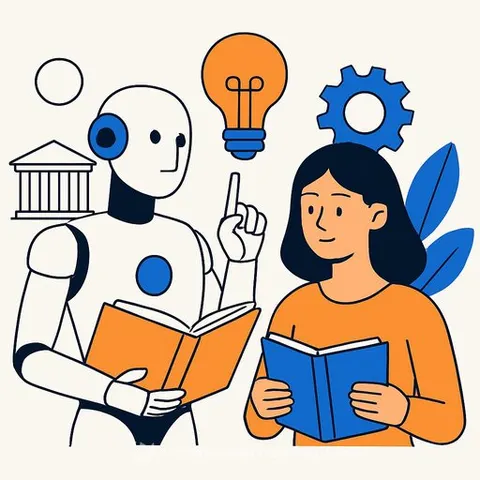
Liberal Arts Degrees Are Now Competitive in an AI-Driven Job Market
For two decades, liberal arts graduates defended their educational choices against skepticism. Philosophy, history, literature, and political science majors faced repeated questions about employment prospects as employers prioritized technical skills and engineering degrees offered clearer career paths.
That dynamic is reversing. As organizations integrate AI into workflows, they are discovering that technical proficiency alone is insufficient. The challenge has shifted from producing information-AI already does that-to determining which information matters, which conclusions deserve trust, and which questions should be pursued.
What Changes When Answers Become Abundant
AI dramatically lowers barriers to generating answers, conducting research, and producing analysis. Tasks that once required specialized training now take seconds. When something becomes abundant, its value changes.
The ability to generate an answer is becoming less scarce. The ability to evaluate that answer is becoming more important. The ability to produce content is becoming less differentiated. The ability to determine whether that content is accurate, meaningful, and aligned with human goals is becoming increasingly valuable.
This shift explains why employers now emphasize critical thinking, communication, adaptability, and ethical reasoning-capabilities liberal arts programs have long taught.
What Liberal Arts Actually Develop
History teaches students to recognize patterns and understand context. Philosophy trains them to examine assumptions and wrestle with competing ideas. Literature develops empathy and interpretation. Political science and sociology explore power, human behavior, and decision-making.
Across these disciplines, students learn to evaluate evidence, communicate clearly, understand complexity, and engage with questions that lack simple answers. These capabilities were valuable before AI. They become essential in a world where machines can participate in generating knowledge but cannot fully understand human consequences.
As one scholar observed: "Machines may increasingly answer questions. Universities must still teach which questions are worth asking."
The Convergence Matters More Than the Choice
The discussion often frames liberal arts versus technical expertise as a choice. This misses the point. Organizations need leaders who understand technology and people. They need professionals who interpret data while understanding context. They need decision-makers who evaluate not only what technology can do, but what it should do.
The emerging opportunity is not the triumph of the liberal arts over STEM but the convergence of both.
What This Means for Educators
Colleges and universities face an opportunity to reframe educational value. The strongest defense of liberal arts isn't cultural enrichment alone. It is preparation for a future in which human judgment becomes increasingly important.
Institutions that help students connect critical thinking, communication, ethical reasoning, creativity, and adaptability to real-world challenges will position themselves far better than those treating these capabilities as secondary outcomes.
Educators can explore how to integrate AI effectively while preserving human dimensions of learning through AI Learning Path for Teachers. For broader context on how AI is reshaping education, see AI for Education.
The Real Insight
The most interesting development may be what AI is revealing about the enduring value of human capability. As intelligent systems become more capable of generating answers, organizations are rediscovering the importance of judgment, interpretation, ethics, communication, and meaning.
The liberal arts are not returning because the world has become less technical. They are returning because it has become more technical. The more capable machines become, the more important it is that human beings understand what is valuable, what is worth pursuing, and what kind of future they hope to build.