
AI news ·
AI model predicts post-traumatic headaches in veterans with 85% accuracy, researcher says
UT Health San Antonio researchers boosted AI prediction of veteran headache triggers from 30% to 85% accuracy using patient pain diaries. The model alerts veterans before likely headaches based on personal patterns like weather changes.
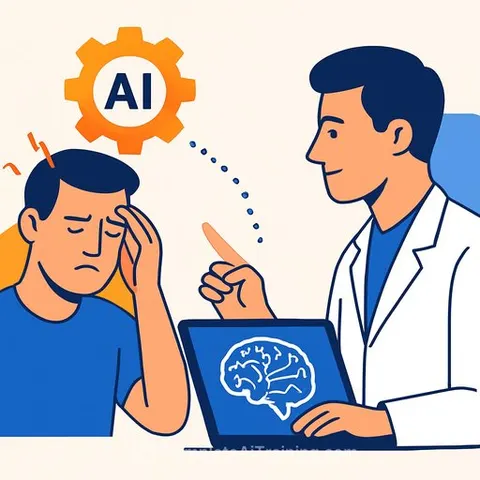
Veterans' Headaches Get Personalized Treatment Through AI Pattern Recognition
Hundreds of thousands of U.S. veterans report at least one traumatic brain injury, often leading to chronic post-traumatic headaches that resist standard medications. Researchers at UT Health San Antonio are using machine learning to predict individual headache triggers and improve treatment outcomes.
Don McGeary, a professor and vice chair for research in psychiatry and behavioral sciences at UT Health San Antonio, found that post-traumatic stress disorder compounds the problem. "It makes it more difficult for those individuals to respond well to treatments," McGeary said. "It increases the likelihood that they'll be emotionally compromised by their headache, and that includes suicide risk."
McGeary discovered that cognitive behavioral therapy designed specifically for veterans with traumatic brain injury and post-traumatic headaches significantly reduces headache disability and PTSD symptoms. The therapy addresses multiple conditions at once-depression, insomnia, and PTSD-rather than just pain management.
How the AI Model Works
McGeary's team trained an AI model that learns from patient data and updates its predictions over time. Patients fill out pain diaries twice daily for months, logging their headaches and potential triggers.
After a baseline evaluation, the AI begins recognizing patterns. If a patient's records show headaches correlate with humidity or rain, the system alerts them when similar weather approaches. "It's like, 'Oh, hey, we're looking at the weather. It's more likely that you're going to have a headache tomorrow, so you might wanna do something about it,'" McGeary said.
The model improves with each patient interaction. McGeary's team increased predictive accuracy from 30 percent to about 85 percent by asking detailed questions and tracking patterns over extended periods.
Personalization as a Treatment Tool
Each person's triggers differ, but the AI creates an individual model that helps patients anticipate and manage pain rather than react to it. This shift from reactive to proactive management builds confidence and reduces headache's impact on daily functioning.
Reducing headache disability also helps patients manage post-traumatic stress symptoms more effectively. "Cognitive and behavioral therapies are ideally suited to this kind of complex clinical picture because these treatments basically teach people how to cope with life in general," McGeary said.
Next Steps for Researchers
As the model improves, McGeary expects it will identify which behavioral treatments work best for different patients. The system may also help physicians match specific medications to patients most likely to benefit from them.
"This will help us zero in on those folks so that physicians can match their treatments to specific patients who are most likely to benefit from them," McGeary said.
Researchers interested in how machine learning applies to clinical outcomes may find value in exploring AI Research Courses and AI for Healthcare training programs that cover predictive modeling and data analysis in medical settings.