
AI news ·
AI moves from pilots to full deployment in U.S. warehouse operations
AI has moved from pilot testing to full warehouse deployment, with robotics, computer vision, and predictive analytics now standard in high-volume facilities. Warehouses without these systems are losing ground on speed and cost.
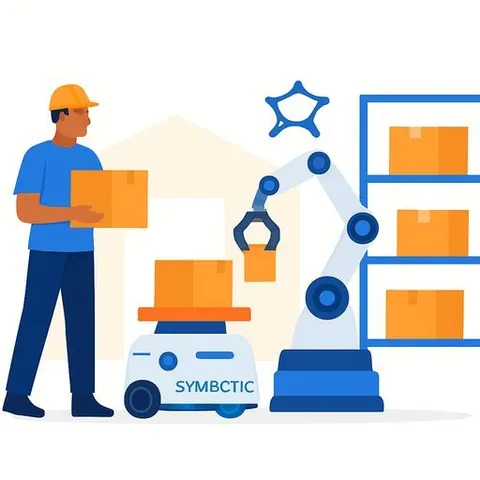
AI Moves From Pilot Projects to Full Warehouse Deployment
Artificial intelligence has moved beyond experimental testing into widespread use across warehouse operations. In 2025-2026, facilities are deploying robotics, computer vision, and predictive analytics systems to handle the volume and speed modern logistics demands.
For operations managers, the shift is practical rather than theoretical. These systems address a real problem: how to maintain efficiency when order volumes fluctuate and delivery windows compress.
Integrated Automation Platforms Replace Piecemeal Systems
Warehouse automation is consolidating around end-to-end AI orchestration platforms. Companies like Symbotic and Dematic now deploy fully integrated systems that combine robotics, conveyors, and AI-powered management software into unified operations.
These platforms handle storage, picking, and palletizing through software that coordinates multiple systems in real time. A single control layer replaces the fragmented approach of bolting separate tools together.
Autonomous Mobile Robots Handle Variable Demand
Autonomous mobile robots (AMRs) have become standard infrastructure in high-volume warehouses. Locus Robotics deploys collaborative robots that work alongside humans to reduce picking time and travel distance. Brightpick offers AI-powered robots that navigate aisles and pick items directly using computer vision and real-time mapping.
The advantage for operations: these systems absorb demand spikes without requiring facility redesigns or physical expansion. When order volume increases, robots scale up. When it decreases, they shift to other tasks.
Computer Vision Detects Problems in Real Time
Computer vision systems now monitor warehouse execution continuously. Cognex provides industrial vision for product identification and defect detection. Deus Robotics builds AI vision platforms that flag inefficiencies directly on the warehouse floor as they occur.
This matters because detection speed determines response time. Real-time monitoring means operators catch bottlenecks before they compound into larger delays.
Generative AI Optimizes Decisions Under Pressure
Generative AI systems now analyze demand patterns and simulate workflows to generate optimized strategies for inventory placement and order fulfillment. Logiwa integrates these capabilities into warehouse management systems to provide predictive insights and automate routine operational decisions.
In high-pressure logistics corridors, this allows operators to react instantly to demand spikes and maintain consistent performance without manual intervention on every decision.
Digital Twins Identify Bottlenecks Before They Form
Digital twin technology creates virtual replicas of physical warehouse facilities. Operators simulate operations and identify bottlenecks before deploying changes on the actual floor.
This approach enables continuous optimization without operational disruption. Managers can refine layouts, improve throughput, and reduce risk through simulation rather than trial and error.
Hybrid Model Remains the Standard
Despite automation advances, fully autonomous warehouses remain rare. The dominant model is hybrid: AI handles repetitive and data-heavy processes, while human workers focus on exceptions and decisions that require judgment.
Companies like Brain Corp develop systems designed for safe human-robot collaboration, using sensors and AI to operate in complex environments where humans and machines work in the same space.
Adoption Is Now Competitive Necessity
For operations managers in high-demand logistics regions, adopting these technologies is no longer optional. Warehouses that integrate AI-driven systems maintain efficiency at scale. Those that don't fall behind on speed and cost.
The direction is clear: warehouses are becoming intelligent ecosystems powered by AI, robotics, and real-time data. Operations teams that understand these systems will manage the facilities that win contracts.
Learn more: AI for Operations or explore the AI Learning Path for Supply Chain Managers to understand how these systems integrate with supply chain strategy.