
AI news ·
AI replaces Beijing research analyst after four years on the job
A Beijing research analyst was laid off after her firm said AI made her role too expensive, and a Chinese court has now ruled that cost savings from AI alone do not justify dismissal.
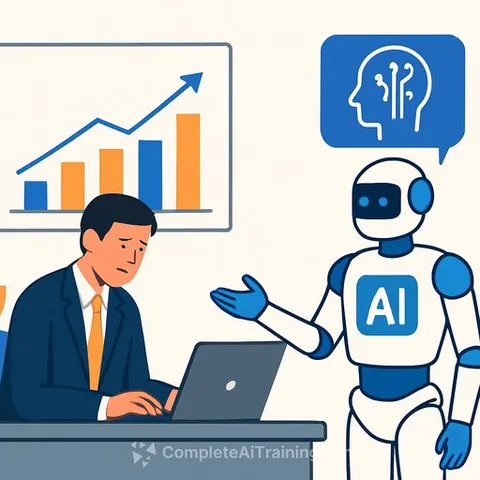
Clare Zhang spent four years as a research analyst at a Beijing corporate advisory firm, producing market and competitor studies that sometimes ran to 500 pages. Late last year, the company dismissed her. The reason, according to Zhang, was explicit: artificial intelligence had reduced the number of analysts the firm needed and could afford. Two former colleagues were laid off shortly afterward.
Her work involved combing through company filings and public records to assemble detailed reports. AI could increasingly collect and organize that information, analyze data, and generate charts in a fraction of the time. The pressure did not stop with individual analysts. Zhang recently learned that her former boss was also struggling with a declining client base, as companies brought research in-house using AI tools, despite warnings that the technology could invent sources and produce convincing but unreliable findings.
"They would rather trust AI because our reports were considered too expensive," Zhang said.
A legal line in the sand
In May, a Chinese court ruled that it was illegal for a company to terminate an employee on the grounds that an AI replacement would be cheaper. The case involved a 35-year-old worker at a Hangzhou fintech firm who oversaw AI-generated responses. He was fired after refusing a demotion and pay cut. The ruling sets a precedent that cost savings from AI alone do not justify dismissal under Chinese labor law.
The decision arrives as more organizations weigh automation against headcount. For HR professionals, the message is clear: citing AI as a cheaper alternative during a termination carries legal risk. The Hangzhou court drew a firm boundary, treating the employer's rationale as an unlawful grounds for dismissal.
What HR teams need to watch
Zhang's experience reflects a pattern that HR departments will increasingly encounter. When a company reduces analyst roles because AI handles research faster, the decision may appear to be a straightforward efficiency move. But the legal framework in some jurisdictions is already pushing back. The Chinese court ruling signals that regulators and judges are scrutinizing the link between AI adoption and workforce decisions.
HR leaders should also track the reliability concerns Zhang's team raised with clients. AI-generated research can fabricate sources. Companies that rely on it without human oversight risk propagating errors that damage credibility. The tension between cost and accuracy is not going away.
Why this matters for HR professionals
Termination decisions tied to AI adoption need documented, lawful grounds that go beyond cost comparison. The Hangzhou ruling shows that "an AI can do this cheaper" will not hold up in court. HR teams should review dismissal procedures to ensure that performance, restructuring needs, or other valid reasons are the stated basis - not the availability of cheaper automation. As AI for Human Resources reshapes workforce planning, the legal boundaries around these decisions are hardening. Leaders building an AI Learning Path for CHROs will need to integrate compliance frameworks alongside adoption strategy.