
AI news ·
AI tutoring works best as a supplement to teachers, not a replacement, universities find
Some universities are finding AI useful for specific problems like student retention and academic integrity-not as a wholesale fix. The tools that work best solve one clear problem rather than chasing every new feature.
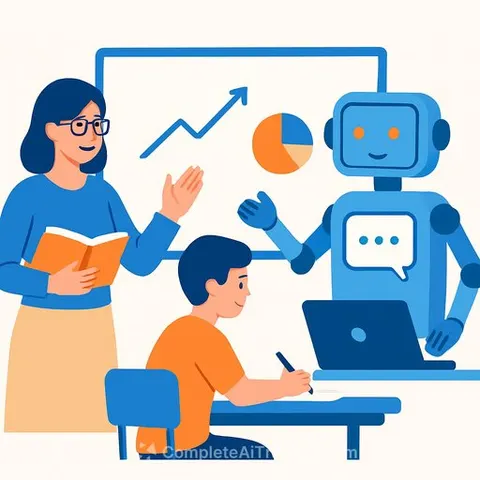
AI in Higher Education: Where It Actually Works
Universities have spent years hearing competing claims about artificial intelligence. One camp promised algorithms would personalize learning and reinvent the campus. The other warned that machines would undermine scholarship itself. Most academics, reasonably, remain skeptical of both.
The early promises were overstated. Technology was supposed to transform classrooms. In many places, it mostly created another set of tools to manage.
But away from the hype, some institutions are finding practical uses. AI for Education is proving valuable not as a wholesale disruptor, but as a solution to specific problems that have resisted other fixes.
Student Retention and Early Intervention
Universities have long known which students are at risk of dropping out. Warning signs appear early. The bottleneck has never been awareness - it has been acting fast enough.
Predictive systems are beginning to help. They identify patterns in student behavior, allowing advisors to intervene before students leave the system. This is incremental work, not revolutionary, but it addresses a genuine institutional challenge.
The Integrity Problem
Generative AI and LLM technology has upended assumptions about academic assessment faster than most campuses could respond. The tension is real. Many institutions still rely on policies built for an earlier era.
Some are rethinking assessment itself rather than treating every assignment as a policing exercise. They are moving toward oral examinations, applied problem-solving, and work done in collaborative or public settings. This shift may force a useful question: what, exactly, are universities trying to measure?
The Institutions Getting It Right
Schools that are succeeding with these tools share one instinct: they do not chase every new feature. They start with a specific problem and ask whether a tool helps solve it.
This is different from adopting technology for its own sake. It is also a more honest case for AI in education.
The strongest argument for these systems was never that they would transform education wholesale. It is that, used carefully, they can improve parts of it.
What Technology Cannot Replace
Education still depends on human judgment, intellectual friction, mentorship, and the unpredictable moments when ideas click in a classroom. No software replaces that. Nor should it.
What technology may do, at its best, is create more capacity for those moments. At a supplement to teachers, AI tutoring can provide scalable support that many institutions struggle to offer alone.
This is less dramatic than the hype promised. But it may be far more important.