
AI news ·
AI's empty voice fits a political moment already drained of meaning
AI-generated fabrications - fake quotes, false citations, invented sources - are showing up in published work with growing frequency. For writers, the risk isn't just bad facts; it's losing your own voice to a medium that can't actually think.
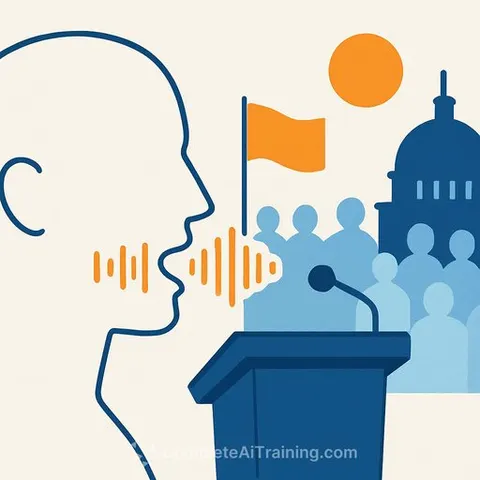
Writers Face a Choice: Use AI or Maintain Credibility
A book about AI's impact on reality included more than half a dozen fabricated quotes. A Commonwealth Prize-winning short story drew accusations of AI authorship. A journalist's research turned up fake citations. These aren't edge cases anymore-they're warnings about what happens when writers treat AI as a research partner.
The problem runs deeper than factual errors. AI produces a recognizable voice: short declarative sentences, informal mimicry of personhood, advertorial narration. That tone is spreading. Customer service emails sound like it. Social media posts sound like it. Press releases sound like it. Politicians sound like it.
For writers, the risk isn't just contamination from external sources. It's internal. Constant exposure to AI's blandness can erode your own voice without you noticing. The concern isn't paranoia-it's pattern recognition.
What Gets Lost When You Outsource Thinking
Writing isn't just rendering thoughts in a certain style. It's the alchemy of one person drawing on their own experience, history, and way of seeing the world to construct an idea. A thousand AI-generated Dickenses won't produce a new iconic writer. AI can only derive from what already exists. It cannot create.
There's also the matter of atrophy. Struggling for the right word, crafting a verbal image, lingering with an idea-these aren't inefficiencies to eliminate. They're how thinking happens. When you ask AI to produce a line on deadline, you skip the conceptualization that consolidates what you actually believe.
Research shows that relying on large language models may reduce brain engagement. The trade-off for speed is a reduction in consciousness itself.
The Political Consequence
The cauterization of individual voice suits this political moment perfectly. Social media fills with AI-generated accounts posting authoritative texts about wars and personal experiences that never happened. Politicians adopt a numbing drone of repetitive slogans and avoidant hedging. The result: loud extremists on one end, centrist politicians terrified of ideology on the other, with actual ideas obscured by the eerie affect of trying not to sound like you believe anything.
AI didn't create this environment. But it's accelerating it. When everyone sounds the same, trust breaks down.
The Social Contract
One writer acknowledged that AI output was "staggeringly wrong" but still used it. He later said: "Anyone who is a working writer today...you're using AI one way or another at least in part because it is not only seductive as hell but it's really incredibly valuable."
That's a profoundly cynical comment. It assumes there is no world in which writers have a choice-that convenience has already decided the matter.
But choice matters. What's at stake isn't a few unfortunate errors. It's a commitment to strive, imperfectly but always credibly. When you resist AI, you're making an investment in maintaining the veracity of the world everyone experiences together.
George Bernard Shaw put it plainly: "The liar's punishment is, not in the least that he is not believed, but that he cannot believe anyone else." When verification becomes impossible, trust collapses.
For writers, the question is whether convenience is worth the cost.
- Learn more about AI for Writers and how to use it responsibly
- Explore AI Research Courses to understand the risks of AI-assisted fact-checking