
AI news ·
Arizona universities redesign curricula to prepare graduates for AI-driven careers in marketing and healthcare
Arizona universities are redesigning marketing and nursing programs to require both AI skills and traditional expertise. ASU, U of A, and NAU have added machine learning, predictive analytics, and diagnostic AI training to meet employer demand.
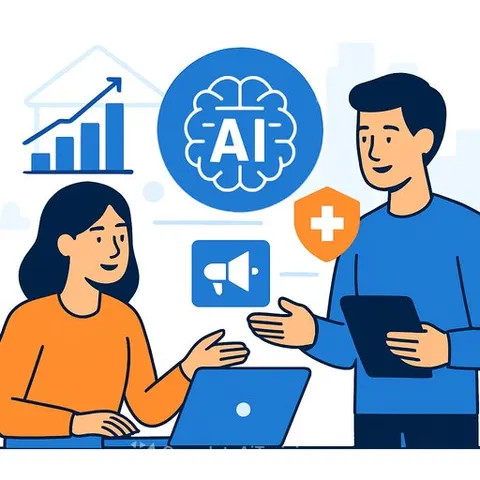
Arizona Universities Restructure Curricula for AI-Driven Job Market
Arizona's universities are overhauling degree programs to prepare students for careers shaped by artificial intelligence. Marketing and healthcare programs are leading the shift, requiring students to master both technical skills and traditional expertise as employers demand hybrid competencies that didn't exist a decade ago.
Marketing Programs Add Analytics Requirements
Arizona State University's W.P. Carey School of Business has redesigned its marketing curriculum to center on AI-powered analytics and consumer behavior prediction. Students now study machine learning algorithms alongside traditional marketing strategy.
"We're seeing marketing roles that require both creative thinking and technical proficiency," said Dr. Sarah Martinez, who leads ASU's Marketing Innovation Lab. "Our graduates need to understand how AI personalizes customer experiences while maintaining the human touch that builds lasting brand relationships."
The University of Arizona's Eller College of Management requires courses in marketing automation, predictive analytics, and AI ethics. Students work on projects with Phoenix-area companies, developing campaigns that use machine learning for customer segmentation and content optimization.
The increased rigor has created pressure on students balancing mathematical foundations with traditional strategy. Some turn to outside academic support to manage the dual demands of analytical and creative coursework.
Nursing Programs Integrate Diagnostic AI Tools
Arizona's nursing programs face similar pressure as AI begins reshaping patient care. The state's acute nursing shortage and aging population have pushed universities to accelerate graduation while ensuring students can work effectively with AI diagnostic tools and automated monitoring systems.
Northern Arizona University's nursing program now includes mandatory training on AI-powered patient assessment software and predictive health analytics. Students learn to interpret algorithmic recommendations while maintaining the critical thinking skills essential for patient advocacy.
"Artificial intelligence can process vast amounts of patient data instantly, but it cannot replace the compassion, intuition, and communication skills that define excellent nursing care," said Professor Janet Rodriguez, who directs NAU's Clinical Simulation Center.
Nursing students must now master both clinical skills and technology integration, often requiring additional academic support to manage increased workload while maintaining certification standards.
Industry Partnerships Bridge Theory and Practice
Arizona's universities have partnered with major employers to ensure curricula reflect actual workforce needs. TSMC's semiconductor investment in Phoenix has created demand for technically skilled marketing professionals who can communicate complex manufacturing capabilities to global customers.
Banner Health and Mayo Clinic's Arizona operations provide nursing students hands-on experience with AI-powered diagnostic tools and patient management systems. Graduates enter the workforce already familiar with the technologies they'll use daily.
"The key is bridging the gap between academic theory and practical application," said Dr. Michael Chen, who coordinates industry partnerships at Arizona State. "Our students need to understand not just how AI works, but how it fits into existing workflows and organizational structures."
Universities Address Faculty and Student Support Gaps
The rapid integration of AI has strained faculty capacity. Instructors often struggle to keep pace with technological advances, requiring significant professional development investment.
Universities have responded with peer tutoring programs, industry mentorship networks, and flexible assessment methods. They've invested in simulation labs and technology centers where students practice with industry-standard tools before internships.
Federal funding for educational technology upgrades has helped Arizona universities provide students access to the same AI platforms they'll encounter professionally.
Next Steps: Cross-Disciplinary AI Training
ASU has announced plans for an AI Ethics Institute to train students across all disciplines on the societal implications of automated decision-making. The University of Arizona is developing a cross-college certification program combining data science, psychology, and domain expertise.
These initiatives position Arizona as a national leader in preparing students for AI-driven careers. The state's combination of growing technology investment, established healthcare infrastructure, and innovative institutions creates an environment for developing the hybrid skill sets employers demand.
For education professionals, this shift signals broader changes ahead. Learn more about AI for Education and how AI for Marketing is reshaping professional preparation programs.