
AI news ·
Boston Children's Hospital CMO calls for diverse data as AI reshapes patient care and drug development
Boston Children's Hospital CMO Dr. Joan LaRovere says AI is already entering clinical workflows, from transcribing patient notes to speeding diagnosis. She warns that biased training data will worsen existing health disparities if left unchecked.
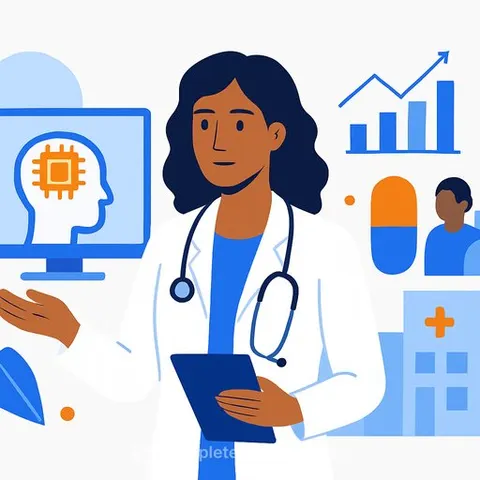
Boston Children's Hospital CMO: AI Will Reshape Healthcare Delivery
Dr. Joan LaRovere, Chief Medical Officer at Boston Children's Hospital, compares artificial intelligence's emerging role in healthcare to an industrial revolution. Speaking on Bloomberg Businessweek Daily, she outlined how AI is already moving into clinical workflows and stressed that realizing its full potential requires careful attention to data quality and diversity.
AI Is Already Changing Daily Clinical Work
AI tools are entering hospitals now. Some transcribe patient conversations to generate clinical notes, freeing clinicians to spend more time with patients rather than paperwork. Others analyze large data sets-including real-time information streams-to improve diagnostic accuracy and speed treatment discovery.
The scale of data AI can process exceeds what human clinicians can review alone. This capacity promises faster diagnosis and accelerated drug development, an area historically burdened by high costs and long timelines.
Data Gaps Are Creating Healthcare Inequities
LaRovere identified a critical problem: historical clinical trials and AI training data underrepresent women and other populations. If AI models learn from incomplete data, they will perpetuate existing healthcare disparities into the future.
Building representative data sets matters. This means pulling information from diverse sources-electronic health records, biobanks, and community health systems-to create accurate disease models across different populations. Without this work, AI tools risk delivering worse care to patients already receiving worse care.
Personalized Medicine Becomes Possible at Scale
AI can analyze individual patient data-genetics, lifestyle, medical history-to tailor treatments to each person's biology. This moves medicine away from one-size-fits-all protocols toward interventions designed for specific disease trajectories.
For rare diseases, where patient populations are small and traditional drug development uneconomical, AI can accelerate discovery and bring therapies to market faster.
Implementation Requires More Than Technology
LaRovere emphasized that technology alone is insufficient. Healthcare systems need strong data infrastructure, regulatory frameworks that ensure equitable access, and public trust in how AI tools are built and deployed.
She pointed to solutions designed for local communities as a priority-systems that address specific regional healthcare gaps rather than generic platforms. This approach could extend effective care to underserved areas.
Learn more about AI for Healthcare and Data Analysis applications in clinical settings.