Can AI Create Genuine Artistic Creativity?
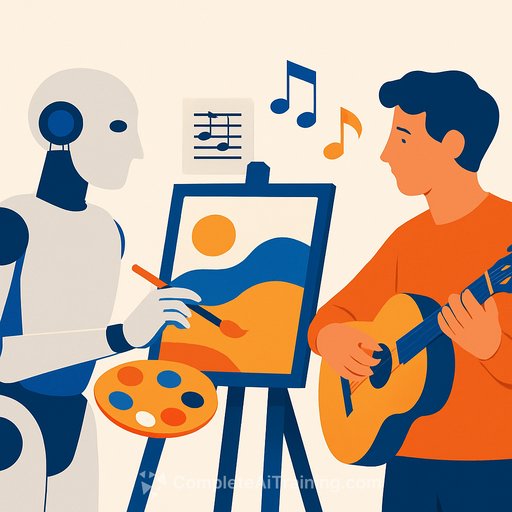
Ludwig van Beethoven’s genius wasn’t just his skill on the piano but his ability to mentally compose complex instrumental layers without hearing them. His Symphony No. 10, however, remains unfinished. In 2019, Dr. Matthias Röder and a global team of music experts developed an AI tool to complete this work. This raises a key question: can AI craft music with the same depth that emerges from human struggle? And can machines truly be creative?
AI today can handle the technical aspects of music production, freeing artists to focus on inspiration and storytelling. Yet many artists agree that AI cannot replicate the emotion, subtlety, and personal touch of human performance. Some projects push AI further—such as Studio Blo’s virtual pop singer AISHAN, whose voice and compositions are entirely AI-generated, or the Collective Artists Network using AI characters for storytelling.
These developments spark important legal debates. Many creators object to AI models trained on their work without consent, highlighting ongoing tensions between innovation and intellectual property rights.
AI’s Role in Creativity: Tool or Originator?
- AI can automate routine tasks in the creative process, increasing efficiency.
- True emotional nuance and individuality remain challenging for AI to replicate.
- Some AI projects produce fully AI-generated music and characters, testing creative boundaries.
- Legal and ethical challenges are emerging around AI training data and content ownership.
India’s Push for Indigenous AI Innovation
Artificial intelligence is widely recognized as a transformative technology, but building AI solutions locally presents challenges. At a recent panel in Bengaluru, leaders from OpenAI, Microsoft, and IIT Madras discussed AI’s current state and future in India.
Srinivas Narayanan, VP of Engineering at OpenAI, noted India is OpenAI’s second-largest market, driven by massive adoption of tools like ChatGPT and its image generation feature. Microsoft’s Aparna Chennapragada highlighted how quickly AI adoption is compressing technology shifts that previously took years into months. The experts agreed that India is not just a major market but also a promising innovation hub, despite hurdles in development capacity.
Building indigenous AI models in India is seen as a strategic priority to address local demands and challenges. This approach could foster tailored solutions better suited to India’s unique context.
Key Takeaways on AI Development in India
- India ranks among the top global markets for AI adoption.
- AI technology cycles are accelerating compared to past tech trends.
- Local AI model development is crucial for addressing specific regional needs.
- Collaboration between industry and academia can drive innovation despite obstacles.
For IT professionals and developers interested in AI’s evolving role in creativity and innovation, exploring courses and resources can deepen practical skills. Consider checking out Complete AI Training’s latest AI courses to stay updated on this fast-moving field.
Your membership also unlocks: