
AI news ·
Experts question whether companies are using AI as cover for routine layoffs
AI was cited as the reason for 26% of U.S. job cuts in April - 21,490 positions. But several CEOs and economists say companies are using AI as cover for cuts they'd make anyway.
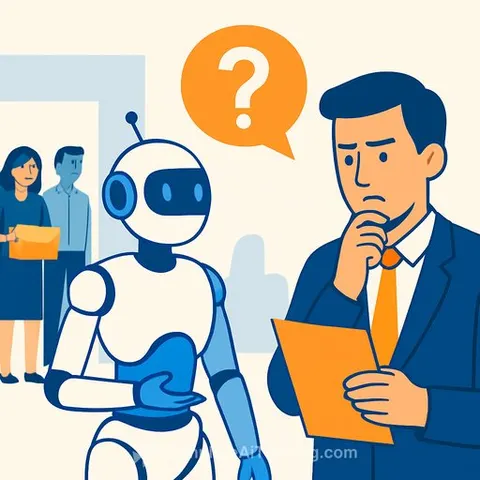
CEOs Blame AI for Layoffs, But Some Experts Say Companies Are Hiding Real Problems
U.S. employers announced 83,387 job cuts in April, with artificial intelligence cited as the reason for 26% of them-21,490 positions. This marks the second consecutive month that AI topped the list of reasons companies gave for layoffs.
Yet some industry leaders and economists question whether AI is genuinely driving these cuts or serving as cover for deeper business failures.
The skeptics
Jason Droege, CEO of AI infrastructure company Scale AI, said in April that executives are hiding behind AI as an "excuse" to reduce staff under the guise of "right-sizing"-cuts they would make regardless of the technology.
Sam Altman, CEO of OpenAI, accused companies of "AI washing" layoffs earlier this year, saying they blame the technology for cuts they "would otherwise do" anyway.
Torsten Slok, Apollo's chief economist, suggested that "underperforming companies are throwing AI under the bus… looking to escape accountability," according to a Business Insider interview.
What companies are actually saying
Major tech firms including Coinbase, Meta, and Oracle have announced thousands of job cuts attributed to AI integration. Brian Armstrong, Coinbase CEO, said his company is reducing some teams to single employees expected to handle the same workload with AI assistance.
Jack Dorsey said Block's cuts were designed to create smaller, faster teams built around AI tools. Marc Benioff, Salesforce CEO, took a different approach-announcing plans to hire 1,000 new graduates and interns to "ride the AI exponential."
The broader context
The tech sector announced 33,361 job cuts in April alone, bringing year-to-date tech layoffs to 85,411-a 33% increase compared to the same period last year. This is the highest number of year-to-date tech layoffs in years.
Across all industries, market and economic conditions remain the most cited reason for job cuts overall, followed by closings and restructuring. AI ranks third.
Stanford Professor Morgan Frank published research showing that many jobs now targeted for AI-driven replacement were already at risk before the technology's recent boom. This suggests some layoffs attributed to AI may reflect pre-existing vulnerabilities rather than new technological displacement.
One-third of the public worries about significant job losses due to AI, according to a recent poll. Dario Amodei, CEO of Anthropic, has warned that AI companies and government officials are "sugar-coating" the reality that mass job eliminations are likely coming.
For HR and management professionals, understanding whether AI adoption is genuinely reshaping roles or masking organizational problems is essential. AI for Human Resources and AI Learning Path for CHROs provide frameworks for evaluating AI's actual impact on workforce strategy versus the claims companies make publicly.