
AI news ·
Commercial insurers struggle to implement AI due to legacy systems and data challenges
Legacy systems and data gaps prevent commercial insurers from scaling AI beyond small pilots. Carriers failing to modernize risk falling behind agile competitors.
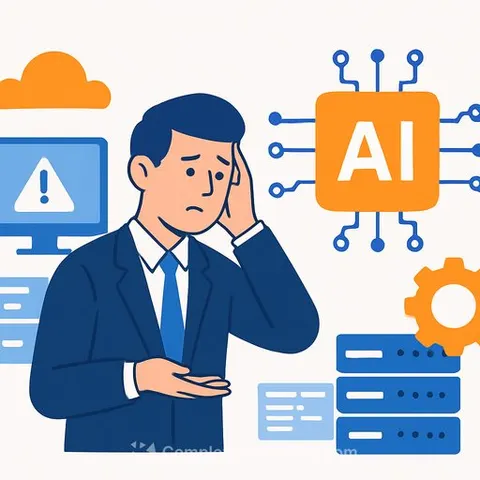
Despite the potential of artificial intelligence to improve underwriting, claims management, and risk assessment, many commercial insurers still struggle to move beyond small experiments. Dependence on legacy infrastructure, fragmented data, regulatory hurdles, and workforce gaps continue to slow enterprise-wide adoption, leaving carriers at risk of falling behind more agile competitors.
Legacy systems and infrastructure roadblocks
Many insurance organizations still run on decades-old technology that was never built for modern AI. These platforms often lack the APIs and integration points needed to connect with today's machine learning tools. When core systems trap data in silos and rely on manual processes, every AI project starts with an uphill technical battle.
- Limited system integration capabilities
- Outdated data storage environments
- Heavy dependence on manual workflows
- Difficulty linking AI solutions to underwriting and claims platforms
AI models need accurate, structured, and accessible data. Modernizing infrastructure through cloud adoption, scalable platforms, and well-designed APIs is becoming a prerequisite for any insurer serious about moving from pilots to production.
Data quality and accessibility gaps
Insurance companies manage policy records, claims histories, risk assessments, and customer files, often scattered across incompatible systems. Incomplete or inconsistent data makes AI models less reliable and erodes trust among underwriters and claims staff. The sector's complex, specialized risks mean that generic models trained on broad datasets rarely translate into useful business decisions. Adopting AI for Insurance demands carefully curated data, strong governance, and domain context-not just algorithms. Without that foundation, even well-designed models deliver unreliable outputs.
Scaling beyond proofs of concept
Many insurers can build a working AI demo but struggle to embed it into daily operations. Underwriting workflows, claims processes, and policy administration systems must absorb AI recommendations without breaking the rhythm of how people actually work. The road from prototype to enterprise scale requires both technology expertise and deep insurance domain knowledge. Partnerships with providers that understand risk selection, coverage terms, and regulatory demands can help insurers design practical, integrated solutions that produce measurable results.
Regulatory pressure and the trust barrier
Commercial insurance operates under intense scrutiny. Regulators expect transparency in how underwriting decisions are made, how customer data is protected, and how potential bias is identified and reduced. Customers and brokers will not trust black-box systems they don't understand. Responsible adoption demands human oversight, explainable AI techniques, and rigorous security measures. Insurers that embed these practices into their AI strategies from day one will find it easier to win both regulatory approval and market confidence.
Skills shortages and organizational readiness
Technology alone will not drive AI transformation. Many carriers lack enough data engineers, machine learning specialists, and cloud architects with insurance domain knowledge. At the same time, underwriters, adjusters, and brokers need to learn how AI tools augment their expertise rather than replace it. Creating an AI-ready culture starts at the top. Senior leaders can explore AI for Executives & Strategy to align technology investments with business goals and build internal capabilities that close the readiness gap.
Why this matters for insurance professionals
The speed at which a carrier assesses risk, resolves claims, and serves brokers increasingly depends on its ability to apply AI to everyday work. Underwriters and claims adjusters inside organizations that fail to modernize data infrastructure and integrate practical AI tools will face mounting competitive disadvantages-slower decisions, less accurate pricing, and frustrated distribution partners. Pushing for realistic, workflow-friendly adoption and building the data governance that AI demands isn't just an IT concern. It directly affects career relevance and the quality of daily work in a market where faster, data-informed judgment wins.