
AI news ·
Dealers who treat AI as software first are missing its compounding value, says QoreAI CEO
Dealerships that treat AI like traditional software are falling behind, says QoreAI CEO Todd Smith. Build your own AI-powered operations now or lose that intelligence the moment a vendor contract ends.
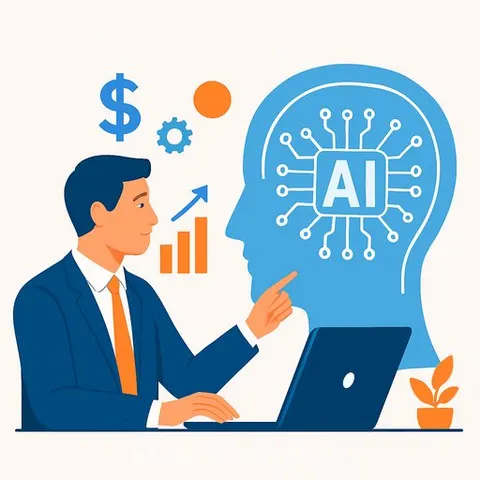
Dealerships Must Treat AI as an Operating System, Not Software
Car dealers face an immediate competitive choice: build AI-powered operations now or rely on vendor tools that disappear when contracts end. Todd Smith, CEO of QoreAI, argues that dealerships treating AI like traditional software are making a fundamental mistake.
Unlike conventional software where users input data and receive output, AI requires training, context, and time to learn how a dealership operates. Smith compares the process to hiring a new employee who starts without instruction but, once trained, consistently outperforms individual team members.
"This is very compounding technology. It's not linear. You're not making a once a year update to your SaaS tool," Smith said.
Start with the dealership brain, not customer-facing chatbots
Most dealerships deploy AI backward. They point it immediately at customers through chatbots and outbound messaging. Smith urges the opposite approach: turn AI inward first.
The foundation is what he calls the "dealership brain"-a centralized repository of institutional knowledge, workflows, employee processes, and transactional data. Most dealerships store this knowledge in outdated binders, in the habits of long-tenured employees, or not at all.
Once captured and structured, AI can optimize operations across sales, service, finance, and marketing in ways no human team can match alone. This is where AI for Operations becomes essential for dealership leaders.
Own your data or rent your intelligence
Smith draws a sharp line between dealers who own their intelligence and those who rent it. Dealerships that allow transactional data to flow freely into third-party systems hand over their most valuable asset.
Tesla and Amazon built dominant market positions not on products, but on data. Dealership transactional data-the point where a customer writes a check-ranks among the most coveted data on the market. Vendors who access it freely will eventually monetize it and sell AI-powered insights back to dealers as a product.
Consumers already use AI to compare pricing, assess inventory, and evaluate dealership reputations through aggregated reviews. Dealers who attempt to game pricing or manipulate their digital presence will find AI dismissing them from results entirely as trust and transparency become the currency of the large language model era.
Where AI delivers immediate results
Marketing: The shift moves away from broad conquest campaigns toward true one-to-one customer engagement.
Service: AI can route vehicles to technicians based on demonstrated efficiency.
Used-vehicle operations: Rather than pricing a car based on a handful of data points, AI can evaluate tens of thousands of variables simultaneously and update recommendations in seconds. Data Analysis at this scale gives operations teams a genuine edge.
HR: Dealers can upload a resume and instantly generate role-specific interview questions tailored to their culture. Managers can practice difficult employee conversations with real-time compliance and tone feedback.
The ROI isn't immediate-it's compounding
When dealers ask about return on investment, Smith reframes the question. The value of AI is not measured in immediate revenue but in compounding operational efficiency.
He draws a parallel to Michael Dell building a leaner manufacturing model to outpace IBM and Compaq despite their size and resources. Dealers who invest in building AI-powered operations today will be positioned to compete well beyond their local markets as that efficiency gap widens.
But Smith is direct about urgency. Unlike the internet era, where dealers who waited a few years could still catch up, AI's exponential pace eliminates that cushion. The window of unassisted AI work has grown from minutes to 12 continuous hours and is accelerating.
Dealers who act now will own their intelligence and continue building on it. Those who rely entirely on vendor-supplied tools will find that intelligence disappears the moment they cancel a contract.