
AI news ·
eHealth's AI voice agent earns 77% exceptional satisfaction ratings during Medicare enrollment peak
eHealth's AI voice agent Alice earned "exceptional" ratings from 77% of Medicare callers and drove a 27% higher purchase rate than human agents. The company now answers every enrollment call immediately, including after hours.
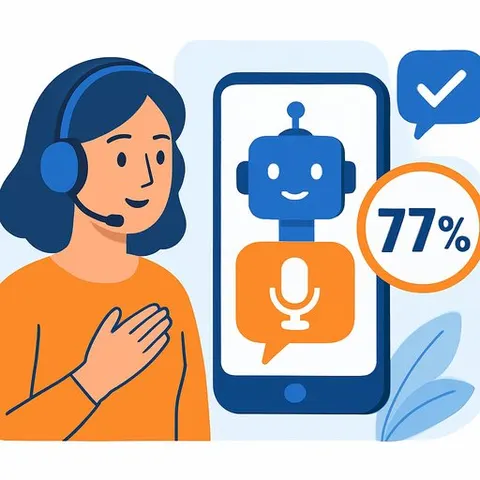
AI voice agents handle peak enrollment surge with 77% exceptional satisfaction ratings
Most customers will accept an AI voice agent - but only if they know a human is available. A Metrigy study of 1,000 North American consumers found that 59.1% are willing to let an AI agent attempt to solve their issue, provided escalation to a human is possible. Another 30% skip the AI step entirely and request a human immediately, while 11% hang up upon realizing they're speaking to a machine.
eHealth, a healthcare insurance marketplace, tested this willingness during Medicare open enrollment season. The company deployed an AI voice agent called Alice to handle the surge of calls from Americans shopping for coverage. Historically, eHealth hired hundreds of temporary agents during peak enrollment and still left customers in long queues.
With Alice in place, eHealth now answers every call immediately, including after-hours requests. The results: 77% of Medicare Advantage beneficiaries rated their experience as "exceptional" in post-call surveys.
AI outperformed human agents on sales
eHealth reported a 27% higher purchase rate when customers spoke with Alice versus human agents. This contradicts broader industry findings. Most companies report that human agents perform better at selling new products (61.2% vs. 38.3% for AI) and upselling during service calls (58.8% vs. 41.2%).
Ketan Babaria, chief digital and AI officer at eHealth, attributed Alice's sales success to three factors: consistency, call structure, and clean handoffs to live agents.
The company built Alice to deliver the same experience every time, based on lessons learned from real conversations. When customers transfer to a human agent, that agent receives full context about the caller's needs and preferences.
eHealth also programmed Alice to prioritize empathy over task completion. "Selecting a Medicare plan is often a very personal and complex decision," Babaria said. "Everyone shopping for health insurance, especially Medicare enrollees, needs patience and space to explain their personal circumstances, including preferred doctors, medications, and other coverage considerations."
Among after-hours callers assisted by Alice, 30.9% expressed interest in purchasing compared to 24.4% for human screeners. Babaria credited this to making the experience "more respectful and seamless." When beneficiaries feel heard, they stay engaged and remain confident in the assistance.
Triage and resolution reduce agent workload
eHealth uses Alice for two functions: triage and direct resolution. During enrollment periods, Alice gathers initial information from callers and schedules follow-up appointments, passing all background details to human agents.
This approach reduces repetition and lets human agents focus on complex tasks like plan selection and enrollment. Call duration shortened because the AI-driven screening process follows a consistent structure. When a call transfers, the agent skips the intake questions and moves directly into plan comparison.
For ongoing support, Alice resolves routine issues directly. These include questions about application status, ID card timing, billing contacts, and Do Not Call requests. Beneficiaries can request a human at any time, but many issues get resolved without a transfer.
Compliance and audit trails matter
eHealth built compliance into Alice from the start. The system delivers required disclosures exactly as written and does not rewrite or improvise. Every conversation is recorded and traceable.
Interactions are continuously logged and reviewed against compliance and performance standards before and after deployment. This visibility allows eHealth to scale automation while maintaining oversight.
Alice already handles tasks beyond conversation. The agent can remove deceased family members from outreach lists while responding with empathy, check application status, and process Do Not Call requests. eHealth plans to expand Alice's capabilities to scheduling appointments, handling claims inquiries, and updating contact information across systems.
The priority remains ensuring these actions stay compliant and traceable. Every AI action is logged, creating a clear audit trail.
Next steps: outbound calls and other insurance types
With inbound customer experience proven, eHealth is exploring outbound use cases and expanding Alice's role to support customers shopping for other types of health insurance plans beyond Medicare Advantage.
For customer support leaders, the takeaway is clear: AI voice agents can handle peak demand if they resolve issues and transfer smoothly to humans when needed. Building empathy and maintaining call context across handoffs matters more than pushing harder to sell.