
AI news ·
Florida law requires AI data centers to cover their own utility costs, shielding residents from rate hikes
Florida's SB 484, signed by Gov. DeSantis in May 2026, bars AI data centers from shifting their utility costs onto residential customers. The law also lets companies keep expansion plans confidential for up to a year.
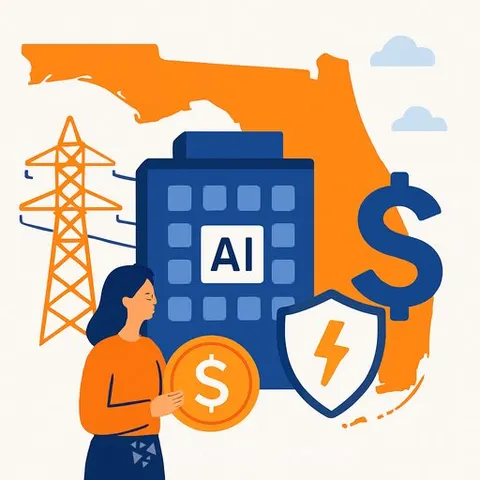
Florida Law Requires AI Data Centers to Pay Own Utility Costs
Florida's new data center law prevents artificial intelligence companies from passing infrastructure expenses to residential customers. Gov. Ron DeSantis signed SB 484 in May 2026, requiring the state's Public Service Commission to ensure data centers cover their own utility costs.
The law addresses a practical concern: as AI facilities expand, their massive energy demands could otherwise increase bills for Florida residents. The Public Service Commission now has explicit authority to block cost-shifting arrangements.
What the Law Covers
SB 484 requires data centers that expand or relocate to Florida to fund their own utility infrastructure. Local governments retain authority to regulate land development related to data centers.
The Florida Office of Program Policy Analysis and Government Accountability must study data center construction and operations, submitting findings to state leadership by July 1, 2027.
The Transparency Compromise
The law permits AI companies to keep expansion plans confidential for up to one year through nondisclosure agreements with state agencies. This provision differs significantly from DeSantis's original request for full transparency.
The House rewrote the bill following discussions with White House officials who favor AI expansion. The Senate ultimately approved the revised version in the final hours of the 2026 legislative session.
DeSantis championed strict regulations and transparency requirements, positioning himself as an outlier among Republicans on AI oversight. The final law represents a middle ground between the governor's position and the House's approach.
For legal professionals, understanding AI for Legal frameworks and AI for Government policy is essential to navigating these emerging regulatory requirements.