
AI news ·
Francesco Palanda details six steps to manage AI business interruption risk
AI errors causing financial harm without physical damage are often excluded from standard property policies. Insurance pros must treat these AI exposures as separate from IT risk.
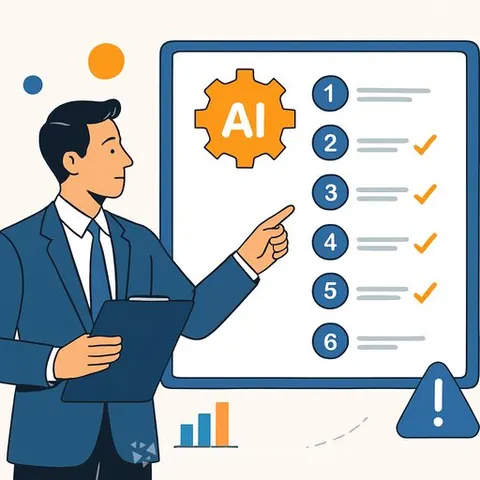
As businesses embed AI into revenue-generating operations, the traditional line between physical damage and business interruption is blurring. AI-specific failures-inaccurate outputs, hallucinations, or algorithmic drift-can cause significant financial harm without a server ever going down, and many standard property policies don't cover these losses. Insurance professionals advising corporate clients must now evaluate AI-related exposures as distinct from conventional IT risks.
Mapping AI usage and technology
Insurance professionals should first determine whether AI supports back-office functions or directly drives revenue and decision-making. When an AI system is central to operations, even brief disruptions or output errors create immediate financial consequences. Ask whether the technology uses machine learning for prediction or generative models for content creation, and map out third-party dependencies and data inputs that could introduce risk.
Calculating the cost of AI errors
Losses from AI failures often lack the physical damage triggers required by traditional business interruption policies. A flawed AI-generated pricing model or an erroneous automated trading decision can erode revenue and trigger contractual liabilities, yet leave no property damage. Underwriters and brokers need to quantify these non-physical exposures-lost sales, reputational harm, and regulatory penalties-to understand the full scope of a client's risk.
Plugging insurance gaps
Attorneys and insurance advisors should verify that clients maintain internal safeguards: human review of critical outputs, validation protocols, continuous monitoring, and incident response plans tailored to AI errors. Without these controls, the path to insurance recovery becomes steeper. When reviewing current policies, cyber and errors and omissions (E&O) lines deserve special attention, as courts increasingly accept business interruption claims from cyber events even absent physical damage.
For insurance professionals navigating this shift, resources on AI for Insurance can provide deeper insights into risk assessment and policy automation. Where coverage gaps remain, enhanced cyber or technology E&O policies that cover non-physical business interruption, algorithmic errors, and data-integrity risks should be considered. Some insurers are beginning to offer AI-specific products, and policyholders benefit from working with brokers and counsel who understand these new options.
Why this matters for insurance professionals
AI-related business interruption losses will only grow as companies embed these tools into core workflows. Brokers, underwriters, and claims adjusters who can differentiate between standard IT downtime and AI-specific failures will be better positioned to design coverage that pays. Early movers are already closing these gaps with flexible cyber and E&O wordings and demanding stronger risk controls from insureds.