
AI news ·
Hangzhou court rules AI adoption alone does not justify employee termination
A Hangzhou court ruled that replacing a worker with AI does not legally justify dismissal under Chinese labor law. The decision frames automation as a business choice, not grounds for termination without due process.
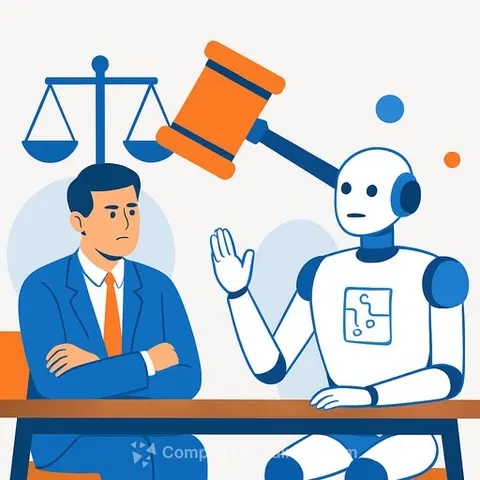
Chinese Court Rules AI Adoption Alone Cannot Justify Layoffs
A Hangzhou court has blocked an employer from terminating an employee solely because their role was partly automated, establishing that AI adoption does not meet the legal threshold for dismissal under Chinese labor law.
The court found that the company's justification-replacing the worker with artificial intelligence-did not constitute a "major change in objective circumstances" required to end an employment contract. The employee had refused reassignment after a significant pay cut and was eventually dismissed.
According to the court's statement, "The termination grounds cited by the company did not fall under negative circumstances such as business downsizing or operational difficulties, nor did they meet the legal condition that made it 'impossible to continue the employment contract.'"
A Management Choice, Not an External Shock
The ruling distinguishes between treating AI adoption as an unforeseeable external disruption and recognizing it as a deliberate business decision.
Rather than viewing automation as an uncontrollable event that automatically justifies workforce cuts, the court framed it as a strategic choice. That distinction matters: if AI is a management decision rather than an external shock, employers may need to demonstrate due process before eliminating roles.
This could require consultation with affected workers, retraining opportunities, and genuine attempts at redeployment before termination becomes an option.
What This Means Beyond China
The Hangzhou ruling does not set legal precedent outside China, but its logic is spreading. Worker-side counsel in other markets now have a sharper argument: that AI adoption is a choice, and companies must show their work before passing the cost to employees.
In India, existing labor frameworks already require notice and compensation for technology-driven layoffs. The Chinese ruling may strengthen interpretations that such restructuring must follow established statutory processes.
Europe and the UK already have consultation requirements and limits on automated decision-making. The court's reasoning could increase the evidentiary burden on employers in those jurisdictions as well.
Documentation and Narrative Alignment
For HR leaders, the ruling highlights an immediate practical risk: consistency between how companies document workforce decisions and how they communicate them publicly.
Organizations that emphasize AI-driven productivity gains in investor communications while attributing layoffs internally to restructuring or skill gaps may find those narratives challenged in disputes.
In practice, this means employers should clearly document:
- Why a specific role was eliminated
- What alternatives were considered
- Whether redeployment or retraining were meaningfully explored
- How internal reasoning aligns with external messaging
Regulatory attention to this alignment is likely to increase as AI-driven workforce changes accelerate.
The Broader Shift in How AI Gets Evaluated
The ruling moves AI adoption beyond a purely operational or financial discussion into governance territory.
For HR teams, this means AI initiatives can no longer be evaluated solely on efficiency metrics. They now carry direct legal exposure and require workforce strategy alignment.
The next phase of disputes will not focus on whether AI has economic value, but on whether companies can demonstrate fair process in adopting it and managing its workforce impact.
Enterprise AI investment will likely continue accelerating. What changes is execution and communication. Companies may become more cautious about explicitly linking layoffs to AI, but that approach carries risks if documentation and public messaging diverge.
HR's role may need to shift from hiring and firing toward reassignment, training, and reskilling in the AI era. That evolution reflects a governance reality: workforce changes tied to AI now require the same documentation rigor as any other significant employment decision.
For more on managing workforce strategy alongside AI adoption, explore AI for Human Resources or the AI Learning Path for CHROs.