
AI news ·
Healthcare data breaches affect 289 million people in 2024 as demand for AI security training grows
Healthcare breaches exposed 289 million people in 2024, making it the most targeted sector for cyberattacks. AI tools can speed up threat detection, but only if security staff know how to use them.
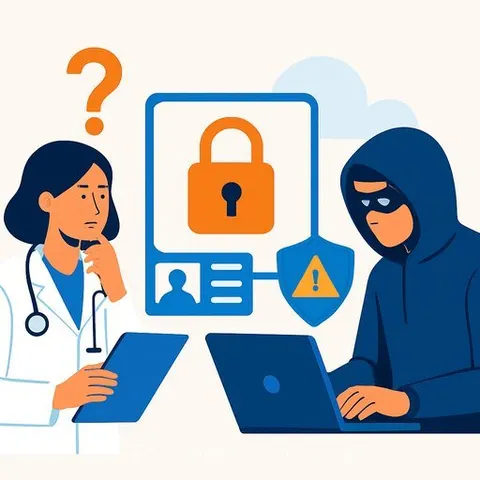
Healthcare Data Breaches Surge; AI Training Becomes Critical for Security Teams
Healthcare organizations face escalating cyber threats that exposed more than 289 million individuals in 2024 alone. The industry remains the most targeted sector for cyberattacks, with hacking and IT-related incidents driving the majority of breaches. As attackers grow more sophisticated, healthcare leaders and IT professionals increasingly recognize that technology alone cannot close the security gap.
The solution lies partly in artificial intelligence-but only if the people managing those systems understand how to use them effectively.
Why Healthcare Data Attracts Criminals
Medical records command premium prices on the black market. Unlike stolen credit card numbers, patient data contains personal identifiers, insurance details, treatment histories, and financial information that criminals can exploit for years.
Healthcare ecosystems compound the problem. Hospitals, clinics, insurance providers, laboratories, and third-party vendors exchange sensitive information daily across interconnected systems. A single vulnerability in this network can expose millions of records.
Recent analyses show phishing attacks, social engineering, backup failures, and weak data governance remain leading causes of major incidents. Ransomware campaigns and credential theft continue to plague the sector.
AI's Role in Detection and Response
AI-powered security systems analyze massive volumes of network activity and identify suspicious behavior faster than manual monitoring. These systems detect anomalies, flag unusual login patterns, monitor access to patient records, and predict vulnerabilities before attackers exploit them.
AI learns from evolving attack patterns and provides real-time threat intelligence. It automates incident response and improves risk management across organizations. But this capability depends entirely on having trained professionals who can interpret AI-generated insights and make informed decisions.
The Skills Gap
Healthcare leaders, IT professionals, compliance officers, and cybersecurity specialists need hands-on understanding of AI fundamentals, machine learning applications, data governance, and automation. Without it, organizations waste cybersecurity investments.
As healthcare integrates AI into patient care, diagnostics, administration, and security operations, demand for AI-literate professionals will grow. Organizations that prioritize AI education now will respond faster to emerging threats while maintaining regulatory compliance and patient trust.
Building Resilient Teams
Cybersecurity must be treated as continuous process, not a one-time initiative. Organizations need proactive threat detection, stronger governance frameworks, and ongoing workforce development.
The most effective approach combines technological innovation with human expertise. AI identifies risks faster than traditional systems, but humans must oversee strategy, compliance, and incident response decisions. Organizations investing in both advanced tools and staff training will better mitigate future threats.
Healthcare professionals can start building these skills through AI for Healthcare training programs or specialized paths like AI for Cybersecurity Analysts.
Key Questions
- Why target healthcare? Patient data enables identity theft, insurance fraud, and other crimes with long-term value.
- How does AI reduce breaches? Real-time detection of unusual activity, automated monitoring, and faster incident response.
- What attacks are most common? Ransomware, phishing, credential theft, unauthorized access, and social engineering.
- Why does training matter? Professionals must interpret AI insights accurately and strengthen security strategies with AI tools.
- How do organizations prepare? Invest in AI education, strengthen data governance, adopt AI-powered security, and partner with training providers.