
AI news ·
Hofstra engineering school adds AI ethics certificate as it doubles down on human-centered curriculum
Hofstra's engineering school is building AI ethics and human judgment into its core curriculum, not treating them as electives. A new certificate program teaches students how AI fails-not just how it works.
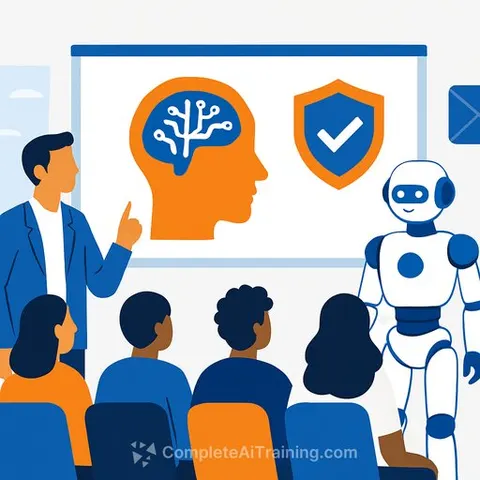
Universities Must Teach Students to Question, Not Just Build
As artificial intelligence handles routine engineering tasks-drafting code, writing reports, solving technical problems-universities face a choice: teach students to compete with machines or teach them what machines cannot do.
Hofstra's Fred DeMatteis School of Engineering and Applied Science is betting on the latter. The school integrates three literacies into its curriculum: technological, data, and human. The human literacy piece-critical thinking, communication, cultural judgment-cannot be automated and matters most.
This matters for education professionals designing curricula. Students learn to ask "Should we?" alongside "Can we?" They work in interdisciplinary teams, conduct undergraduate research with faculty as collaborators, and complete internships before graduation. The goal is not job training alone. It is preparing people to participate in civic life and make decisions about technology policy.
A New Certificate in AI Understanding
Hofstra launched a certificate program called AI Foundations, Ethics & Applications, open to undergraduates across disciplines. The program teaches students how AI tools work, where they fail, and what they mean for society.
The ethical dimension sets it apart. Engineers who understand the limitations and implications of AI-not just its capabilities-will shape the next decade. That distinction separates technical competence from judgment.
What Engineering Education Must Do Now
The university's role extends beyond preparing workers. It must forge a social compact between institutions, employers, governments, and learners that makes lifelong learning a reality, not an aspiration.
Students at SEAS go on to work in aerospace, biomedical devices, cybersecurity, civil infrastructure, and AI development. Their decisions affect real people. Preparing them technically alone leaves a gap.
A Hofstra education aims to prepare individuals to lead ethically within organizations and contribute meaningfully to communities shaped by the systems engineers build. That is what human-centered engineering education looks like in practice.
For more on how institutions are rethinking education in the age of AI, see AI for Education and Generative AI and LLM.