
AI news ·
Hotels use AI to handle logistics so staff can focus on making guests feel at home
Hotels using AI for routine tasks see 20-35% higher direct booking conversions. The real goal: free staff to focus on guest experience instead of checklists.
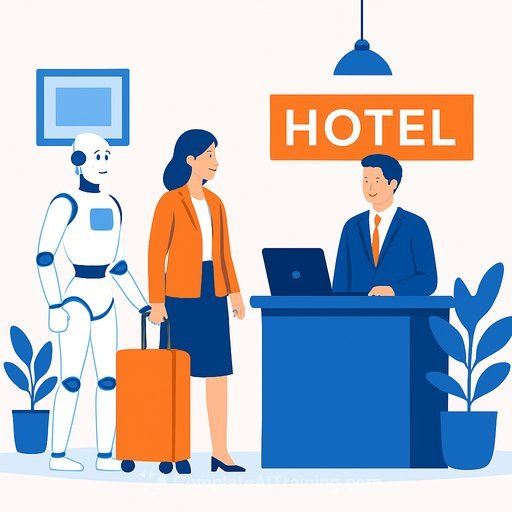
AI Frees Hotel Staff to Do What Machines Can't: Create Human Connection
As artificial intelligence spreads across industries, hotel operators face a choice: use AI to cut costs or use it to enhance the guest experience. The answer, according to Richard Valtr, founder of Mews, a $2.5 billion property management platform used by over 15,000 properties worldwide, is that AI should do both-by handling routine work so staff can focus on what only humans deliver.
"What's really nice about AI is that it can do that checklist for you now," Valtr said at the Mews Unfold conference in Amsterdam. "So, what are you going to do to actually justify your job?"
He frames this not as a threat but as an opportunity. If scheduling, revenue optimization, messaging, and operational bookkeeping move to intelligent systems, hotel staff can return to their core function: making guests feel at home.
Two Different Paths
Budget and economy hotels will use AI primarily for survival. Chatbots handle pre-arrival questions and room upsells. Automated check-in and dynamic pricing systems allow skeleton crews to serve more guests without raising prices. Hotels using AI chatbots report 20-35% higher conversion rates on direct booking inquiries compared to static web forms.
Luxury properties can move in the opposite direction. If AI absorbs operational complexity, hotels can redeploy staff as guides, local experts, and genuine hosts. "In five-star hotels, you might want to actually employ way more people," Valtr said, "which means that in order to make sure that they're acting as guides or assistants, you really need to boost your revenues."
Both models depend on the same principle: AI handles the checklist so humans can do the work that only humans can do.
The Roger Federer Test
Valtr uses a tennis analogy to describe his vision. When Roger Federer stays at a hotel, he doesn't worry about luggage, transportation, or logistics. Everything is orchestrated seamlessly. "That should be where we get to with AI, where every single thing just seamlessly is kind of orchestrated," he said.
The mechanism is "Intelligent Guest Profiles"-combining data from property management systems, point-of-sale platforms, and loyalty programs to build a complete picture of each guest's preferences. When a returning guest checks in, the system already knows they prefer a high floor, drink oat milk lattes, and asked for extra pillows last time.
Most hotels aren't close to this. "Hotels are unbelievably unaware of where they are," Valtr said. "So much of the time they don't know where the guests are going to have dinner."
Location as Leverage
According to Mews' revenue management data, location is the top factor driving guests' willingness to pay a premium. Yet most properties treat their neighborhood like a static backdrop, offering laminated restaurant cards and a concierge with a few personal recommendations.
AI should turn every hotel into a hyper-local concierge. A business traveler and a couple on a romantic weekend should receive different suggestions, tailored before check-in. Hotels should broker access to local restaurants, events, and experiences-making guests feel like insiders rather than tourists.
"Everyone, when they come somewhere, they want to feel like a local," Valtr said. Hotels have never replicated that feeling at scale. AI combined with real-time local intelligence might make it possible.
Loyalty Programs as Currency
Most hotel loyalty programs treat points as discounts: earn enough nights, get a free one. Valtr argues they should function as currency, expandable across experiences beyond the property.
If a hotel knows you're a Knicks fan, it shouldn't offer a discounted room. It should proactively offer a hotel-plus-tickets package in Oklahoma City when the Knicks play there. AI connects those dots: travel history, sports fandom, dining preferences, spending patterns.
Some hotel groups already move this direction. Marriott has expanded where its Bonvoy currency works. Accor's loyalty program ties into experiences beyond the property.
Valtr drew a parallel to ride-sharing. Once you experience hailing a car from your phone, returning to flagging down a taxi felt intolerable. The same expectation shift is coming to hotel interactions. The first company to proactively deliver the room and the seats before guests ask will earn their loyalty.
"Hospitality is the business of experiences," Valtr said.
Learn more about AI for Hospitality & Events and AI for Customer Support to understand how these tools apply to your role.