
AI news ·
How Kubernetes and Cloud Native Tools Accelerate AI App Development and Transform Business Operations
Cloud native AI apps need fast, efficient toolsets like Kubernetes for scalable, flexible deployment and cost control. Pizza Hut’s digital shift shows how this boosts innovation and uptime.
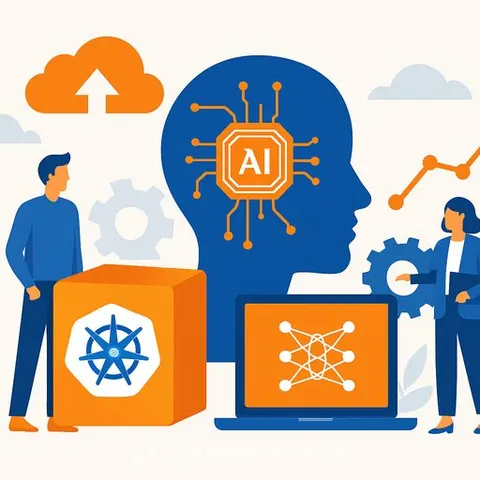
Why Faster, More Efficient Toolsets Are Key for Cloud Native AI Apps
The surge in cloud native AI applications demands toolsets that keep up with the pace and complexity of development. Kubernetes has emerged as the go-to platform for AI workloads, enabling quick, scalable, and efficient app deployment.
Cloud Native AI—integrating AI/ML into cloud native architectures—represents a shift from traditional methods. It leverages the core strengths of cloud native environments: scalability, flexibility, resilience, and efficiency. For product development teams, this means faster iterations with better resource management.
What Makes This Shift Crucial?
At its core, the move to cloud native AI is about speed and efficiency. Using tools like Kubernetes affects an organization’s key performance indicators directly, including:
- Scalability and resource efficiency: Cloud native setups provide elastic infrastructure, scaling AI workloads up or down as needed while optimizing costs.
- Agility and faster innovation: Automation and modular structures allow rapid development, testing, and deployment, accelerating innovation cycles.
- Portability and flexibility: Containerization lets AI models move seamlessly across cloud providers or hybrid setups, avoiding vendor lock-in.
For businesses, especially those engaged in ecommerce—which comprises nearly one-fifth of U.S. trading—modernizing IT through cloud native development is critical. Software now underpins nearly every product and service, meaning outdated IT operations risk business viability.
Beyond speed and cost, cloud native approaches improve collaboration among data scientists, developers, and operations teams. They also boost governance and reproducibility of AI models through clear versioning and monitoring, supporting responsible AI practices. Pay-as-you-go cloud models further help control expenses in AI development and deployment.
A Real-World Example: Pizza Hut’s Cloud Native Transformation
Consider Pizza Hut, a major player with thousands of locations across North America. Despite a strong product line, it was losing ground due to a poor digital experience. Customers wanted seamless app ordering, real-time tracking, and reliable delivery.
Their solution was to revamp the entire digital pipeline. They built a modern app and backend running on a Kubernetes-based infrastructure. This setup enabled rapid sales processing via APIs, support for partner channels, and quick innovation cycles.
Importantly, downtime was not an option—thousands of locations depended on uninterrupted digital services. Kubernetes' reliability and scalability ensured the app stayed live and responsive.
This transformation didn’t just improve customer experience; it saved the business by aligning technology with modern consumer expectations.
Introducing the Nutanix Kubernetes Platform (NKP) for Cloud Native AI
Cloud native IT with Kubernetes is more than hype. It’s a practical foundation for AI workloads, offering the flexibility and automation that development teams need to move fast.
The Nutanix Kubernetes Platform (NKP) is designed to deploy and manage Kubernetes clusters across on-premises, edge, and public cloud environments. Key features include:
- Kubernetes for AI workloads: Efficiently manages resource-intensive AI tasks, including GPU sharing and rapid deployment cycles. It makes AI applications portable across clouds and edge locations.
- Proven adoption: Industry leaders like OpenAI, Spotify, and Uber run their AI models on Kubernetes. Surveys show over 90% of companies use or evaluate Kubernetes for production.
- Integration with Nutanix Enterprise AI (NAI): NAI runs on Kubernetes clusters, simplifying AI model deployment. Tools like the AI Navigator chatbot assist engineers with troubleshooting and insights.
- Flexibility and portability: Kubernetes containers prevent vendor lock-in, supporting hybrid and multicloud strategies focused on cost control, performance, and data sovereignty.
- Easy AI deployment: Nutanix’s GPT-in-a-Box leverages Kubernetes for simplified day-two operations, helping teams deploy and manage AI models with minimal overhead.
Why Kubernetes Is the Backbone of Cloud Native AI
Kubernetes powers the new wave of AI app development by enabling scalable, fast, and adaptable services. Traditional tools can’t keep pace with the demands of AI workloads, but platforms like NKP help teams slash development cycles, maximize uptime, and reduce costs.
From established chains like Pizza Hut to AI pioneers such as OpenAI, cloud native AI is helping organizations modernize infrastructure and increase agility. For product development professionals, embracing Kubernetes and cloud native practices is essential to stay competitive and deliver value quickly.
For those interested in expanding skills in AI and cloud native development, explore Complete AI Training’s latest AI courses to stay ahead in this fast-moving field.