
AI news ·
HR risks irrelevance if it cedes AI strategy to technology teams
HR leaders who leave AI decisions to technology teams risk being sidelined as the tools reshape jobs, skills, and org structures without a workforce plan. Those who understand the technology can shape how it's used before the damage is done.
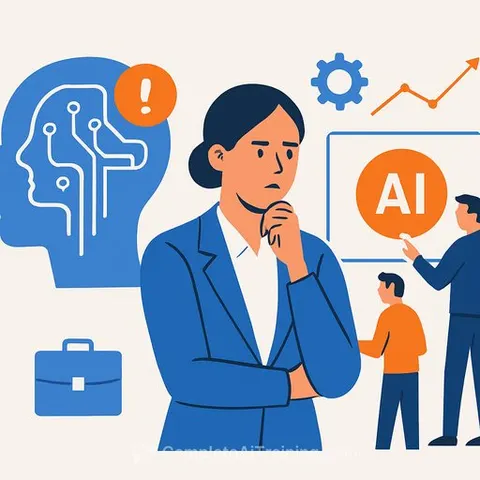
HR must seize control of AI strategy or risk irrelevance
Human resources leaders face a choice: take ownership of artificial intelligence in the workplace or watch the technology reshape their organizations without them.
The problem is structural. AI remains a technology agenda, conceived in engineering rooms and funded through chief technology officer budgets. Teams chase productivity metrics and platform deployments while HR sits on the sidelines.
This arrangement treats workforce strategy as an afterthought to technology investment. It should be the other way around.
The disconnect between talk and action
Years of warnings about AI displacing jobs have produced predictable responses: upskill workers, reskill workers, rethink how work happens. Conference slides promise productivity gains and brighter futures.
Yet the fundamental issue persists. Organizations deploy AI without a clear plan for how people fit into the new structure. HR departments, which should be leading this conversation, are rarely in the room where technology decisions get made.
Why HR leaders must act now
AI is the most powerful lever HR has ever had to reimagine human work. But only if HR understands the technology and insists on shaping its implementation.
This means HR leaders need to know how AI works, what it can and cannot do, and how it affects different roles and skill sets. It means treating workforce planning as the starting point for technology choices, not validating decisions made elsewhere.
For HR professionals looking to build this capability, resources on AI for CHROs and AI for Human Resources provide grounding in both the technical fundamentals and the people-focused applications that matter most.
The stakes are organizational
Companies that let technology teams drive AI deployment risk misalignment between capability and strategy. Roles disappear without replacement plans. Skills gaps widen. Retention suffers.
HR leaders who understand AI can prevent these outcomes. They can identify which functions actually benefit from automation. They can design transitions that protect people while improving operations. They can shape how AI augments human work rather than just replacing it.
The alternative is disruption without direction-and HR will be blamed for the fallout.