
AI news ·
Indiana University lecturer brings AI-focused Arabic language workshops to Morocco and builds new institutional partnerships
Indiana University lecturer Attia Youseif led workshops on AI in Arabic teaching for 100+ educators across Morocco. His "10-80-10" model splits tasks between teachers and AI tools like Gemini and custom GPTs.
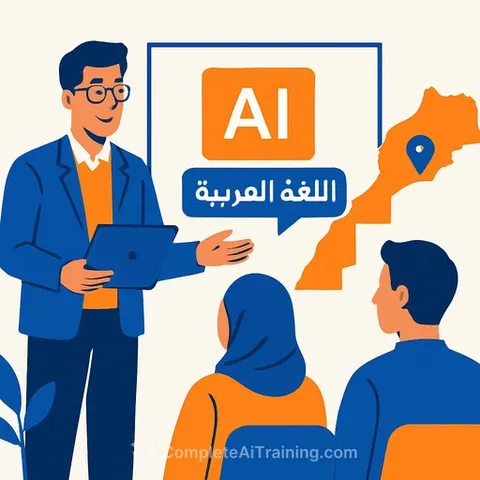
Indiana University lecturer takes AI language teaching methods to Morocco
Attia Youseif, senior lecturer in the Department of Middle Eastern Languages and Cultures at Indiana University's Hamilton Lugar School of Global and International Studies, spent recent weeks across Morocco delivering workshops on artificial intelligence in Arabic instruction to more than 100 educators and doctoral students.
The tour included presentations at Moulay Ismail University, University Sultan Moulay Slimane, the Arab American Language Institute in Morocco, and sessions organized by the Islamic World Educational, Scientific and Cultural Organization.
Building institutional partnerships
Beyond the workshops, Youseif met with university leaders across the region. Those conversations with deans and presidents at three institutions laid groundwork for student exchanges, joint research initiatives, and potential agreements with organizations including the Arab League Educational, Cultural and Scientific Organization.
"These conversations open the door for deeper collaboration in language education, international studies and cultural exchange," Youseif said.
AI as a teaching tool, not a replacement
Youseif's approach treats AI as a "smart partner" in instruction rather than a substitute for human teaching. His workshops focused on practical application, walking educators through tools including Gemini, NotebookLM, and customized GPTs he developed for classroom use.
He advocates what he calls the "10-80-10" model: the first 10% involves defining learning objectives and crafting effective prompts; the AI handles 80% of the task; the final 10% returns to the educator for review, ensuring cultural sensitivity and accuracy.
Educators reported integrating these tools into their teaching immediately after the sessions ended.
"Language is deeply connected to culture and human experience," Youseif said. "That cannot be replaced."
Results in the classroom
At Indiana University, Youseif has developed customized AI tools that provide immediate feedback on grammar and vocabulary while guiding students through revision. The approach builds long-term proficiency rather than offering quick corrections.
Arabic Flagship students studying abroad at the Arab American Language Institute in Morocco earned praise from host institutions for their preparation and readiness compared to peers from other programs.
Youseif's work in AI integration earned recognition through a 2025 award from the Indiana Foreign Language Teachers Association.
The broader mission
For Youseif, these outcomes reflect the Hamilton Lugar School's core purpose. "We are not merely teaching language," he said. "We are opening doors for students to engage with the world, and language is the only key."
Educators interested in practical AI integration strategies may find value in resources focused on AI for Education or the AI Learning Path for Teachers.