
AI news ·
Insurance claims processing shifts from paper documents to AI agents as swiss re, allianz, and lloyds deploy autonomous systems
Swiss Re's ClaimsGenAI generated over 1,000 fraud alerts and flagged hundreds of missed recovery opportunities in its first year, targeting a pipeline worth millions. Lloyds Banking Group expects its 2026 agentic AI deployment to add £100 million in value through automated fraud investigations.
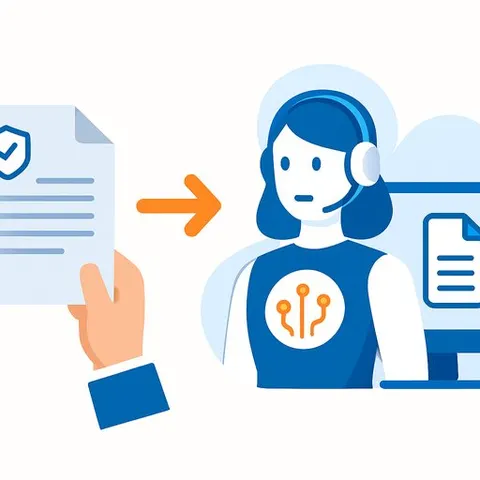
The world's largest reinsurers and insurers are moving agentic AI from pilot programs into live claims workflows, targeting the document-heavy, fraud-prone processes that have historically consumed the most time and introduced the most risk. The shift spans corporate insurance, auto, home, and health lines, with measurable results already appearing in fraud savings and recovery identification.
Swiss Re deployed ClaimsGenAI in mid-2024 to automate its corporate insurance claims handling, where annual claims now exceed 40,000. When a First Notice of Loss arrives, the tool immediately triages documents, scans for useful data, and organizes information for claims handlers. It evaluates incoming documents against keywords indicative of corporate insurance loss scenarios that often lead to successful recoveries, drawing on over two decades of unstructured claims data.
In its first year, ClaimsGenAI generated more than 1,000 alerts for potential irregularities, contributing to a fraud savings pipeline potentially worth millions of dollars. The system also identified hundreds of third-party recovery opportunities beyond those already found by human claims handlers. Florian Maurer, chief D&T officer Corporate Solutions at Swiss Re, and Vincent Plantard, GL head of Performance, Analytics and Delivery at Claims Corporate Solutions, wrote that human decision-making authority remains paramount throughout. The decision-making authority stays with the people overseeing it - a foundational principle of Swiss Re's Responsible AI strategy.
Agentic AI moves from assistance to transactional authority
A World Economic Forum article covering 2026 trends found the financial services industry is shifting from AI assistance to transactional authority across banking and insurance. Agentic AI systems now handle fraud investigations, complex complaints, and claims processing autonomously under human oversight.
Allianz Partners used an AI claims tool to reduce processing time from days to minutes while keeping people involved in oversight. Lloyds Banking Group committed to enterprisewide agentic AI deployment in 2026, expecting the systems to add £100 million in value by automating fraud investigations and reserving human staff for the most nuanced escalations. The article frames the shift as structural: institutions are no longer debating whether to deploy agentic AI in claims and fraud workflows. They are debating how fast to move and what governance needs to be in place before they do.
For claims professionals watching this space, the trajectory is clear. AI Agents & Automation are moving from experimental budgets to operational line items, and the AI for Insurance use cases are becoming concrete: triage, fraud flagging, recovery identification, and image analysis.
Regulators build the oversight framework
A NAIC article updated in April documents how U.S. state insurance regulators are responding to the rapid expansion of AI across underwriting, pricing, claims, and fraud detection. The NAIC's Big Data and Artificial Intelligence Working Group developed an AI Systems Evaluation Tool to help regulators assess insurers' AI use and governance practices. As of March, 12 states are piloting the tool, with full adoption expected at the 2026 Fall National Meeting.
Survey data collected across auto, homeowners, life, and health lines found that 88% of auto insurers, 70% of home insurers, and 92% of health insurers use, plan to use, or plan to explore AI in their operations. In claims specifically, P&C insurers are using AI for accident image analysis, estimating ultimate claim settlement values, and fraud detection. Health insurers are using AI for claims adjudication, prior authorizations, and risk adjustment modeling.
The NAIC article makes clear that when insurers use AI, they remain responsible for complying with all applicable insurance laws, regulations, and consumer protection rules. Human oversight remains an important part of insurance decision-making regardless of how much autonomy AI systems are given.
Why this matters for insurance professionals
The tools are no longer theoretical. Swiss Re's ClaimsGenAI has a year of production data behind it - 1,000-plus fraud alerts, millions in potential savings, and recovery opportunities human handlers missed. For claims managers and adjusters, the question is shifting from "should we use AI" to "how do we govern it and integrate it without losing the human judgment that regulators and carriers both require." The NAIC's evaluation tool will likely become a standard part of compliance conversations by late 2026. Professionals who understand how these systems flag irregularities and organize unstructured data will be positioned to oversee them effectively, rather than be displaced by them.