
AI news ·
Insurers automate decisions while public filings ignore deepfake evidence risks, research finds
Insurers are automating claims with AI, but a study of 76 public filings found zero mention of synthetic media or voice cloning as a risk to evidence integrity. Fraud already costs the U.S.
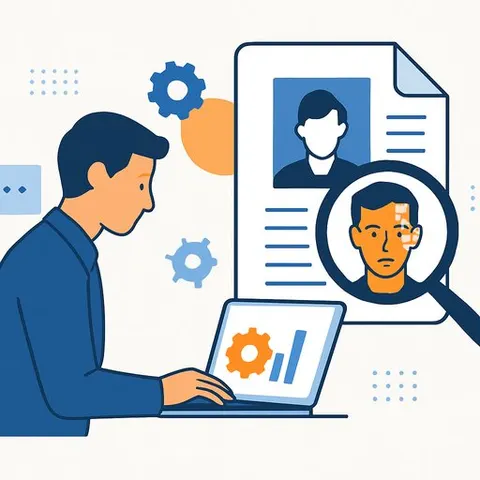
Insurers are racing to automate claims and underwriting with AI, but new research reveals a critical gap: the industry's ability to verify the information feeding those automated systems has not kept pace. A report commissioned by Clearspeed and authored by Sabine VanderLinden, CEO of Alchemy Crew Ventures, found that while AI makes it easier than ever to generate manipulated photos, documents, and voices, public filings from 49 insurers and reinsurers show virtually no acknowledgment of the risk this poses to evidence integrity.
The study, The Speed of Trust: Building the Trust Intelligence Layer for Insurance in the Age of Agentic AI, reviewed 76 public filings, 31 industry studies, and conducted 16 interviews with claims and underwriting leaders in the U.S. and U.K. None of the 76 filings mentioned synthetic media, synthetic identity, or voice cloning. Six companies referenced deepfakes, but only in the context of cybersecurity - never in relation to claims evidence or underwriting inputs. The same pattern held for five of the world's top 10 reinsurers, whose recent annual reports made no mention of AI-generated evidence.
The scale of manipulated evidence
The threat is not hypothetical. Industry research published in March 2026 found that 98% of 300 U.S. claims professionals surveyed agreed that AI editing tools are contributing to increased digital media fraud. Yet only 32% said they were very confident they could identify a deepfake. The asymmetry is stark: creation tools are widely available, while verification capabilities lag behind.
Fraud already extracts a heavy toll. The Coalition Against Insurance Fraud estimates fraud accounts for roughly 10% of property and casualty losses, and the trust deficit costs the U.S. insurance system at least $308.6 billion annually. But the problem extends beyond fraudulent actors. Ian Thompson, former group chief claims officer at Zurich Insurance, told researchers that more than 90% of customers who file claims are honest. When insurers apply heavy-handed verification to catch the minority, legitimate claimants can feel distrusted - a dynamic that erodes customer relationships.
A proposed trust layer for insurance
VanderLinden's report argues for making trust a measurable infrastructure layer throughout the policyholder journey. She calls this a Trust Intelligence Layer, describing it as a continuous, regulator-ready risk indicator. The layer would clear low-risk interactions quickly while routing exceptions to human judgment. It would inform decisions rather than make them, produce an audit trail instead of an automated denial, and operate without requiring demographic or historical data about the person being assessed.
"Insurers face the challenge of determining which interactions require faster processing, greater scrutiny, or human judgment," the researchers said. The report also looks ahead to a near future where customers' AI agents interact directly with insurers' AI agents. In that environment, the need for auditable verification of the human-provided information behind automated transactions becomes even more urgent.
Why this matters for insurance professionals
The findings point to an approaching inflection point. As AI-generated evidence becomes cheaper and more convincing, claims and underwriting workflows that treat all submissions as equally trustworthy will face rising loss ratios and regulatory scrutiny. Insurance leaders who build verification capabilities now - particularly those that produce audit trails without adding friction for honest customers - will have an advantage as the technology landscape shifts. The question is no longer whether manipulated evidence will arrive, but whether your organization can distinguish it from the real thing before a decision is made.