
AI news ·
Japan's Agent builds social ventures to address labor shortages and aging population through AI and education support
Japan faces a severe labor shortage within a decade, pushing companies to treat AI, automation, and robotics as necessities. Agent founder Koji Shinomiya says schools need digital leaders, not just digital tools-without that, implementation fails.
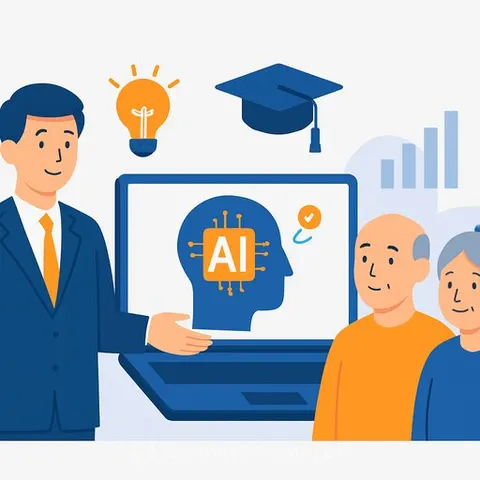
Japan's Digital Transformation Hinges on Education and Workforce Adaptation
Japan faces a critical labor shortage within the next decade. To address it, companies are turning to digital transformation, AI, and robotics as essential tools rather than optional upgrades. Koji Shinomiya, president and founder of Agent, a social venture working across education, staffing, and local government, said Japan's aging population and declining birthrate have made technological adoption urgent.
"Within the next 10 years, the labor shortage is projected to become even more severe," Shinomiya said. "That's why digital transformation, automation, AI, and robotics are not just desirable but absolutely essential."
The Education Sector Needs Digital Leadership
Adoption of digital tools remains uneven across sectors. Education, local government, and industries with legacy systems face particular obstacles. The bottleneck isn't technology itself-it's people who understand both how to use tools and why they matter strategically.
Agent supports over 4,000 elementary schools across Japan in implementing information and communication technology. The company assigns Chief Digital Officers to education boards to serve as strategic advisors, helping leaders select appropriate tools and set direction. "If leadership lacks digital literacy, implementation will almost always fail," Shinomiya said.
This approach addresses a real gap. Schools often receive technology without the guidance needed to integrate it effectively into teaching and learning. A CDO ensures decisions flow from organizational goals rather than vendor pitches.
Where AI Fits-And Where It Doesn't
Agent's philosophy on generative AI and LLM applications separates tasks machines can handle from those requiring human judgment. In education, AI can generate practice problems, provide answers, and collect data. Teaching students to think critically, offering encouragement, and responding to emotional context remain fundamentally human roles.
Shinomiya rejected the concern that AI use reduces independent thinking. "AI can free our mental bandwidth so that we can focus on higher-value thinking areas where we haven't been able to invest energy until now," he said. The shift requires viewing AI as a tool that creates space for deeper work, not as a replacement for it.
Building Entrepreneurs to Solve Local Problems
Agent operates a Startup Campus that trains entrepreneurs to identify and address social issues. Every six months, employees across all departments form teams to develop business concepts addressing specific community needs. This isn't a one-time exercise-it's embedded in performance evaluation and organizational culture.
The company launches approximately four new ventures per year, with a goal of 300 social businesses by 2034. Shinomiya emphasized that success criteria focus on impact, not market size. "The primary criteria isn't market size or profitability, but whether it can make a meaningful impact," he said.
Resource constraints mean Agent remains selective about which ventures to pursue. The Startup Campus helps identify and fund entrepreneurs without requiring all ventures to come from internal teams, allowing the company to scale ideas in parallel.
Localization Over Export
Japanese companies often assume solutions that work domestically will transfer abroad. Shinomiya said this rarely happens without significant adaptation. Each region has distinct priorities and challenges that require local knowledge.
Agent plans to expand the Startup Campus internationally by forming teams that combine Japanese and international entrepreneurs from the start. This approach aims to develop solutions grounded in each region's context rather than importing one-size-fits-all models.
Foreign startups interested in collaborating face a specific challenge: understanding what Japanese companies call "pain points"-often small, localized struggles rather than systemic problems. A bakery losing a part-time employee represents a real business opportunity in Japan. That distinction shapes which problems get solved and how.
Funding Models for Social Ventures
Agent pursues two funding approaches. The company works with angel investors-many of them former entrepreneurs-who join the network and support ventures aligned with their interests. Venture capital comes later, once a business demonstrates product-market fit.
Internal funding supports early-stage businesses through the incubation phase. Consultants guide entrepreneurs toward viability. Once a venture reaches maturity, Agent supports decisions around partnerships or exits, providing full lifecycle support from seed to scale.
For educators and education leaders, this model matters because it determines which solutions get built for schools. Ventures addressing genuine classroom needs have pathways to funding and scaling. Solutions that don't solve real problems exit the pipeline.
What This Means for Education Professionals
Agent's approach to AI for Education emphasizes that technology succeeds when leaders understand strategy, not just operation. Schools adopting digital tools without that foundation waste resources and frustrate teachers and students.
The emphasis on identifying local pain points applies directly to education. Effective digital transformation starts by asking what specific problems teachers, administrators, and students actually face-then building or selecting tools that address those problems. Generic implementation fails.
Shinomiya's long-term roadmap extends through 2034. The company plans to expand its domestic network while launching the international Startup Campus model. For education professionals watching these developments, the takeaway is straightforward: digital transformation in schools requires both the right tools and leaders who understand why those tools matter.