
AI news ·
Kawasaki Heavy Industries opens physical AI center in San Jose with Nvidia, Microsoft and others
Kawasaki Heavy Industries opened a Physical AI Center in San Jose, partnering with Nvidia, Microsoft, Analog Devices, and Fujitsu to build robots for hospitals and factories. Healthcare and nursing care are the initial focus areas.
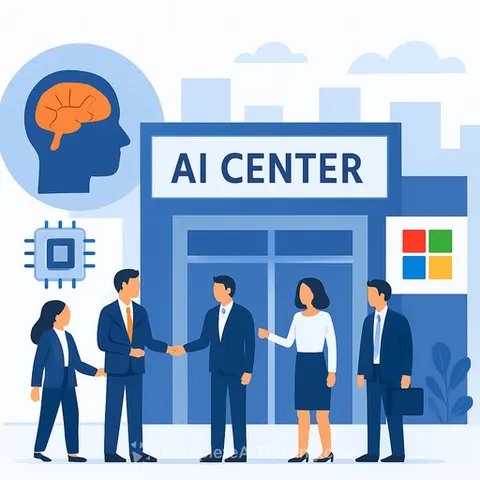
Kawasaki Builds Physical AI Center in Silicon Valley With Nvidia, Microsoft
Kawasaki Heavy Industries opened a Physical AI Center in San Jose to develop robots and autonomous systems that perceive, reason and act in real-world environments. The facility brings together Nvidia, Analog Devices, Microsoft and Fujitsu to accelerate Japan-U.S. collaboration in AI and semiconductors.
Physical AI differs from traditional machine learning. These systems must integrate perception, decision-making and mechanical action-controlling robots that operate in hospitals, factories and delivery environments without constant human direction.
What Kawasaki Plans to Build
The company will combine its existing robotics-including surgical systems, autonomous service robots and delivery platforms-with AI capabilities from its partners. Healthcare and nursing care are the initial focus areas.
Each partner brings specific technical strengths:
- Nvidia will integrate AI and robotics across sectors, starting with healthcare applications
- Analog Devices will develop robots capable of handling multiple tasks through AI, voice recognition and sensing
- Microsoft will provide cloud infrastructure and AI platforms to ensure reliability at scale
- Fujitsu will connect business systems, robotic hardware and AI in healthcare settings
The center will coordinate with Kawasaki's research operations in Japan and Europe to adapt solutions for regional markets.
Why This Matters for Development Teams
Physical AI development requires expertise across robotics, embedded systems, cloud infrastructure and real-time decision-making-skill areas where many development organizations face talent gaps. AI for IT & Development professionals increasingly need to understand how AI models translate into production systems that operate in physical spaces.
The partnership model-combining hardware manufacturers, chip makers and software platforms-reflects how production AI systems actually get built. Teams working on similar projects will need to coordinate across these domains.
For developers tracking Generative AI and LLM applications, this announcement signals how foundation models are moving beyond software into systems that control physical machinery. The technical challenges differ significantly from chatbot or content generation work.
Kawasaki plans continued investment in physical AI and semiconductor development, suggesting the San Jose facility is a long-term commitment rather than a pilot project.