
AI news ·
Korea's AI ambitions depend on teaching students to think before they use AI
South Korea leads the world in AI adoption, but MIT research found that heavy AI use weakens critical thinking-even when people later work without it. Schools must teach students to think independently first, then build AI skills on that foundation.
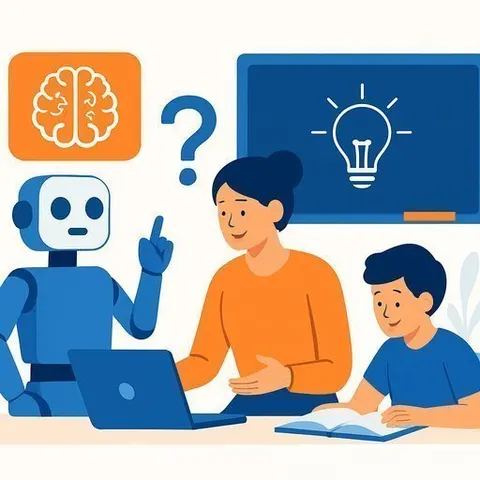
Education Must Teach Students to Think Before Using AI
South Korea ranks second globally in ChatGPT subscriptions and first in AI innovation density. Google DeepMind's decision to open an AI Campus in Seoul, announced on the 10th anniversary of AlphaGo's victory over Lee Sedol, signals confidence in the country's research ecosystem. Yet a critical gap exists: the nation is cultivating AI users, not AI talent.
Using AI does not automatically develop the skills needed to advance the field. Research increasingly shows the opposite.
AI Use May Weaken Critical Thinking
MIT researchers divided participants into three groups: those using AI, those using search engines, and those relying on unaided thinking. They measured brain connectivity while participants wrote essays. The group that used neither AI nor search engines showed the strongest brain connectivity. The AI-using group showed the weakest.
More troubling: participants who had used AI and then wrote without it performed worse than those who had never used AI. Researchers called this "cognitive debt."
Microsoft Research and Carnegie Mellon University reached a similar conclusion. The higher a person's trust in generative AI, the less critical thinking occurs. Productivity may spike in the short term, but it collapses once people lose the ability to judge information independently.
Two Stages of Education Are Required
Schools must teach students to think deeply without AI first, then build critical AI use on that foundation. This means different approaches for K-12 and university education.
In K-12 schools, timing matters. Students need extended periods to struggle with writing, get stuck on problems, and develop their own thoughts through reading before AI enters as a tool. AI tutors and digital textbooks must not become shortcuts that bypass this essential struggle.
Universities face a different pressure. Entry-level hiring in white-collar roles is already declining as AI replaces junior employee work. The traditional division of labor - universities teach general skills, companies provide on-the-job training - no longer holds.
Universities must shift from general competency education toward training that companies can deploy immediately. Curricula should develop the ability to evaluate AI-generated results, reframe problems, and apply domain expertise to make sound judgments.
The Real Measure of AI Competitiveness
Ten years ago, AlphaGo arrived in Korea as proof that AI could beat humans. Today, Google's agreement with Korean universities promises that AI can make discoveries alongside human researchers. Fulfilling that promise requires more than expanding AI use.
It requires people who can think critically alongside AI - those who scrutinize AI outputs, ask deeper questions, and catch what AI misses. Only those who have wrestled with problems alone, hit dead ends, and tried again can doubt an AI's answer.
Korea's true competitive advantage over the next decade will depend not on how many people use AI, but on how many people can think more deeply with it.