
AI news ·
Larroudé CEO builds AI system to connect inventory, factory and sales data, cuts programming team
Footwear CEO Ricardo Larroudé taught himself to code and built an AI system that unified his company's fragmented data. Within 45 minutes of deployment, site conversion jumped from 0.3% to 1.7%.
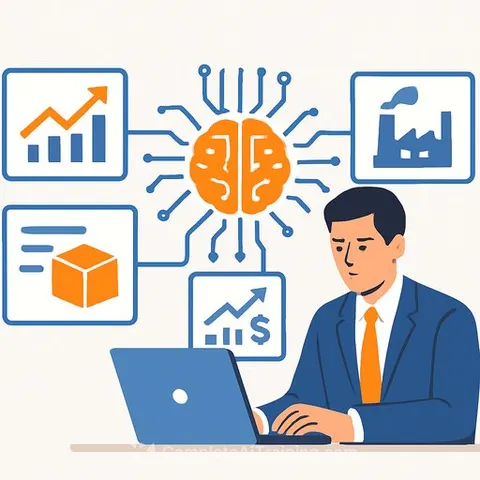
Footwear CEO Builds AI System to Connect Fragmented Business Data
Ricardo Larroudé, CEO of the $100 million footwear company bearing his name, spent the first months of 2026 writing code to solve a problem that had plagued his operations: his company's systems weren't talking to each other.
Shopify held e-commerce data. Factory systems tracked production. Inventory management lived elsewhere. Marketing performance data sat in another silo. Each system contained useful information, but pulling insights across them required manual work that slowed decision-making.
Larroudé used AI coding tools to build an automated connectivity system that unified these data sources. He had no coding background. "I wasn't a coder at all," he said. "I understood what that world was, and I learned quickly."
From Eight Weeks to Clear Visibility
The main data-ingestion phase took about eight weeks. The system now allows Larroudé to trace individual sales back to specific components-a button on a particular shoe, for example-across his entire supply chain.
The technical foundation relies on tools the company already controlled: Shopify for e-commerce, GitHub for code management, Google Cloud for computing power, and BigQuery for data processing. Larroudé used Claude, ChatGPT, and Codex for different tasks, from testing ideas to writing and reviewing code.
One critical requirement: every proposed change goes through a review process before going live. "You need to create those technical checks inside," Larroudé said, referring to code reviews that prevent system breaks, data exposure, or incorrect decisions.
Conversion Rate Jumps Within 45 Minutes
The system proved its value when the company's website conversion rate dropped earlier this year. The AI identified old Shopify apps, scripts, and checkout code slowing down the site. Larroudé used AI tools to generate fixes, review them, and deploy them live.
Conversion jumped from 0.3% to 1.7% within 45 minutes. Checkout completion improved from 25% to 75%.
The initial build phase wasn't cheap. Token costs-fees for running large numbers of AI queries-reached "dozens of thousands" of dollars as the system absorbed company data. During heavy development, monthly costs hit around $20,000 while processing BigQuery quotas. Larroudé expects ongoing costs to settle at "a few thousand" dollars monthly.
That's still less than his previous programming team cost. He had employed 10 people doing work like tagging website pages, cleaning up old code, reconciling product data across systems, and manually preparing inventory reports.
Redefining the Role of Technical Staff
Larroudé reduced his programming staff significantly but kept people who could work with the new system-what he calls "agentic" workers. He avoids the term AI, preferring "agentic" to describe software that takes instructions, completes tasks, and improves workflows with human review before major changes go live.
"I don't like using the word AI," he said. "I like the word agentic, which means dynamic software. I'm keeping the people that can transition to working with dynamic software."
The company still needs technical people, but their role shifted. They review system output, understand controls, and intervene when needed. "If the car is going to hit a post, they're going to have to pull the parking brake," Larroudé said.
Next: Smarter Inventory Planning
The company is now applying the system to inventory management. It can identify which materials the company needs to buy, what it already has in stock, and what it can produce quickly using existing inventory.
If the company has sufficient black leather in stock, the system can factor that into production planning across multiple shoe styles instead of treating each product separately. This could reduce the time between demand and production, shortening overproduction cycles while keeping bestsellers available.
Larroudé's broader lesson for operations leaders: every CEO needs to understand how their company's systems, data, and decisions fit together. "Every CEO needs to be programming right now, not coding," he said. "They need to be programming their company."
For operations professionals, the AI Learning Path for Operations Managers covers how to apply similar approaches to process optimization and supply chain decisions.