
AI news ·
London launches regulatory sandbox to test AI medical technologies in the NHS
London is launching a regulatory sandbox to test AI medical devices in live NHS settings. Up to 10 manufacturers will be selected for the first phase.
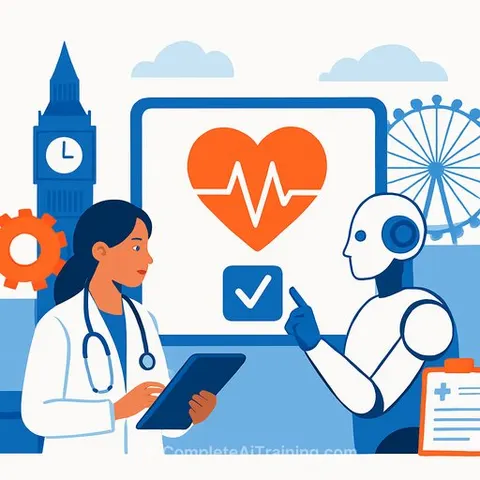
London is launching a regulatory sandbox for AI-driven medical technologies, led by the Medicines and Healthcare products Regulatory Agency (MHRA) in partnership with NHS England and London's Health Innovation Networks. The initiative provides a controlled testing environment to help developers move AI medical devices safely into real-world NHS use, addressing historical bottlenecks in procurement and regulatory uncertainty.
A controlled environment for AI medical devices
The sandbox will initially focus on AI-driven devices and diagnostics. Up to 10 medical device manufacturers will be selected for the first phase to deploy their technologies in live clinical settings across London under MHRA oversight. This builds on the agency's existing AI Airlock program and draws lessons from the Financial Conduct Authority's regulatory sandbox.
"What has been missing is the coordination to bring all of this together," said Chris Streather, London's Medical Director. "For the first time, we have a coherent, system-wide plan to move innovations from promising pilots to widespread adoption - and to make sure the benefits reach every Londoner, not just those in the most advantaged communities."
By enabling outcomes-based deployment, the sandbox generates high-quality evidence on safety and effectiveness. This approach offers developers a clearer route to adoption while supporting AI for Healthcare initiatives that require rigorous real-world validation before scaling across hospital networks.
Addressing NHS pressures and drug development failures
The initiative responds to mounting pressures on the NHS. Adverse drug reactions send approximately 250,000 people to the hospital annually, costing more than £2 billion. Additionally, about 90 percent of drugs fail during development because early testing methods often struggle to predict real-world safety risks.
Regulators hope that AI tools tested through the sandbox will improve safety assessments and identify side effects earlier. This effort highlights how AI for Government frameworks can reduce costly late-stage failures by matching technological development with strict regulatory expectations from the outset.
"Londoners deserve the best that modern medicine has to offer," said Caroline Clarke, Director of NHS London. "This program is about making sure the NHS in London can adopt the latest technologies quickly, safely, and in a way that genuinely improves care for patients."
Streamlining data access and procurement
The regulatory sandbox is one of six programs in the new London Life Sciences Strategy. The broader strategy introduces London Health Innovation Funds to coordinate up to £900 million in NHS working capital for modernization projects. It also reforms procurement to enable pan-London purchasing and longer-term strategic partnerships with suppliers.
To reduce duplicated evaluations, London will introduce Innovator Passports via a central digital platform called MedTech Compass. These passports allow companies to submit a single, standardized evidence file covering regulatory status, data protection, and clinical evidence for review by multiple NHS buyers.
The strategy also increases safe access to health data. Through OneLondon, approved researchers and developers can use de-identified data from nine million Londoners. This spans primary care, hospital, and social care records to support research into cardiovascular disease and health inequalities.
Why this matters for healthcare, government, and IT professionals
For professionals building or deploying medical AI, this sandbox removes the guesswork from regulatory compliance. Working alongside the MHRA from the start allows teams to match their data governance and clinical validation processes with actual regulatory requirements. This reduces the risk of late-stage rejection and creates a predictable pathway for scaling AI tools across the NHS.