
AI news ·
MagicSchool names 9 U.S. school districts for thoughtful AI adoption in K-12 education
MagicSchool named nine U.S. school districts in its first "Class of 2026" report for putting teachers at the center of AI adoption. The districts, spanning Florida to Washington, prioritized training and classroom impact over fast rollouts.
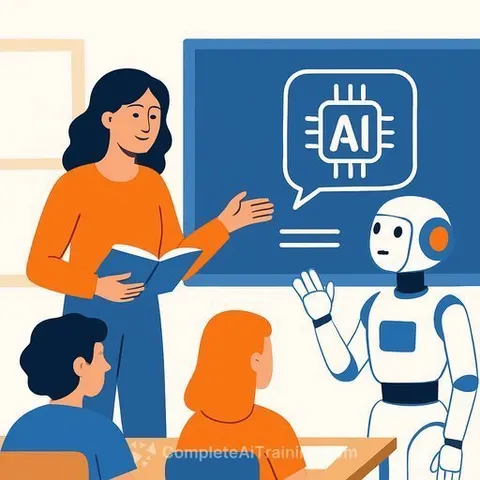
Nine School Districts Named for Teacher-Centered AI Implementation
MagicSchool released its inaugural "Districts Leading the Way: Class of 2026" report, recognizing nine U.S. school districts that are adopting AI with a focus on keeping teachers central to decision-making and supporting student outcomes.
The districts span from Florida to Washington and serve student populations ranging from 29,000 to 224,000. Each has taken a deliberate approach to AI adoption rather than rushing to implement new tools.
What These Districts Have in Common
The nine districts share a common thread: they're asking hard questions before deploying AI, staying close to teacher needs, and measuring success by classroom impact rather than technology adoption rates.
Teachers across these districts are using AI to reclaim time spent on repetitive tasks-lesson planning, differentiation, and assessment grading. That time gets redirected toward student engagement and feedback.
District leaders have also made AI literacy a priority for both educators and students. Several districts explicitly built AI training into teacher development and student curriculum rather than treating it as an add-on.
The Nine Districts
- Atlanta Public Schools, Georgia - Focused on how AI supports individualized student support while maintaining human connection as the centerpiece of innovation.
- Buffalo Public Schools, New York - Launched the Prompt Pioneers initiative, repositioning instructional coaches as design partners who help teachers use AI for deeper lesson design and inclusive instruction.
- Davis School District, Utah - Using AI to streamline routine tasks while preserving the relationships and responsiveness that help students feel supported.
- Denver Public Schools, Colorado - Distributed AI adoption across district leaders-principals, curriculum specialists, and department directors-to strengthen coherence while honoring educator and student assets.
- Hillsborough County Public Schools, Florida - Moved early to identify practical, classroom-ready applications while recognizing that supporting teachers through change matters as much as the technology itself.
- Horry County Schools, South Carolina - Designed AI adoption to meet educators where they are across diverse communities, from coastal to rural areas.
- Northside Independent School District, Texas - Took a measured, system-wide approach that incorporates AI into familiar teacher routines rather than treating it as a separate initiative.
- Pinellas County Schools, Florida - Focused on helping teachers spend less time on repetitive work and more time on planning, feedback, and engagement.
- Seattle Public Schools, Washington - Paired AI tools with clearer expectations around AI literacy as part of digital citizenship, helping students understand how to use AI thoughtfully.
The Approach Differs From Earlier Tech Rollouts
These districts avoided the pilot-program trap where new technology sits in a few classrooms while the rest of the school continues unchanged. Instead, they've built district-wide support structures that help teachers actually use the tools.
Equity considerations appear consistently. Several districts explicitly discussed how AI can help meet diverse student needs-whether that means supporting English language learners, students with disabilities, or students in under-resourced communities.
For educators looking to understand how AI can work in schools, AI for Teachers resources provide practical guidance on classroom applications. Those seeking broader context can explore AI for Education resources.
What School Leaders Should Watch
The report suggests that successful AI adoption in schools depends less on the tool itself and more on how districts introduce it. Training matters. Teacher buy-in matters. Clear governance and privacy protections matter.
Districts that treated AI as a teacher support tool-rather than a replacement or a compliance checkbox-saw faster adoption and more sustained use.