
AI news ·
Meta opens its ad stack to third-party AI tools, but marketers still need a clear operating model
Meta now lets third-party AI tools plug directly into its ad campaign management, ending its closed-stack approach. More access means more risk without clear ownership, vendor rules, and measurement standards in place.
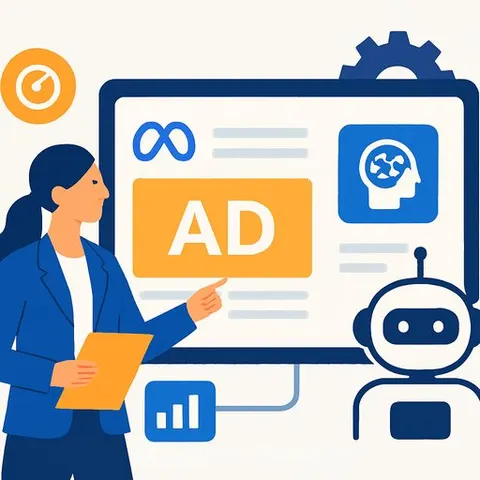
Meta Opens Ad Stack to Third-Party AI Tools. Marketers Need an Operating Model First.
Meta is opening its advertising ecosystem to outside AI platforms through new connectors that let agencies, martech vendors, and AI-native tools plug directly into campaign management. Instead of forcing teams to work only inside Meta's interface, the connectors create room for external systems to handle optimization, creative testing, audience modeling, and budget pacing.
For marketers, this represents a shift from platform-controlled automation to connected workflows where multiple tools and teams need to work together without breaking reporting, creative governance, or brand standards.
What's changing
Meta has spent years building a closed AI ad stack-Advantage+, Andromeda, and generative creative tools all operated within Meta's environment under Meta's rules. The new connectors suggest a different approach: Meta still owns the ecosystem, but is becoming willing to let outside AI layers operate around it.
This matters because major ad platforms have historically pushed advertisers deeper into their own automated systems. Campaigns became easier to launch but harder to control, compare, and govern across channels.
The connector model changes that equation. Third-party AI can now sit closer to the campaign layer. Agencies can run their own optimization logic on top of Meta. Specialist tools can manage creative testing and reporting without forcing teams between disconnected workflows.
The real challenge: execution, not access
More access creates more ways to create problems. Before integrating outside AI, marketers need to answer operational questions that most teams haven't asked yet.
Which tools are approved? Teams need clear policy on which AI vendors can touch campaign data, creative assets, and budget decisions.
Who reviews AI-generated creative? Faster production still needs human oversight for accuracy, brand fit, compliance, and tone.
Who owns optimization? If the platform, agency, and internal team all have separate AI systems making recommendations, someone needs final authority.
How will performance be measured? A connector is only useful if it improves business outcomes, not just dashboard activity.
What happens when systems disagree? Conflicting AI recommendations are coming. Teams need a decision framework before pressure hits.
This is where many brands will stumble. Meta is handing out flexibility, but flexibility without governance becomes chaos fast.
Why discipline beats tools
The pattern across AI marketing is clear: technology moves faster than most teams can operationalize it. Early access is not the competitive edge. Discipline is.
Brands pulling ahead are not plugging in every new AI tool. They are building the muscle to evaluate, integrate, and scale tools without breaking what already works. That means clean data, clear creative workflows, documented approvals, and shared measurement standards.
AI in paid media is becoming an infrastructure game. The flashiest tool will not save a team that cannot agree on ownership, success metrics, or brand guardrails.
What leadership should do now
Marketing leaders should treat Meta's connector rollout as a prompt to tighten their AI operating model. Three questions matter immediately.
What is our position on third-party AI in paid media? Are we testing, integrating, or waiting?
Who owns the AI layer on top of Meta spend? If ownership sits with a vague committee, it effectively belongs to nobody.
What does success look like in 90 days? Define it in numbers: cost per acquisition, creative velocity, launch speed, test volume, or return on ad spend.
Vague AI strategy will not survive the next wave of platform automation. Teams need a specific point of view, a small set of priorities, and a way to measure whether the new workflow is actually better.
The bottom line
Meta opening its ad ecosystem to outside AI is good news for advertisers. More competition at the AI layer could mean better tools, lower costs, and less dependence on one platform's interface.
But platform access does not automatically become business performance. The gap between what is technically possible and what a marketing team can actually execute is where budgets quietly underperform. Meta's connectors widen the opportunity. They also expose weak operating models.
Clear beats clever. Specific beats broad. A focused AI strategy beats a sprawling toolkit every time.
For marketing professionals managing this shift, resources like AI for Marketing and the AI Learning Path for Marketing Managers can help build the operating discipline these integrations require.