
AI news ·
Microsoft launches Dynamics 365 Contact Center with coordinated AI agents to unify customer experience management
Microsoft launched Dynamics 365 Contact Center, a unified platform using three coordinated AI agents to handle self-service, agent assist, and quality management. Real-time voice agents are included, though reliability at scale remains unproven.
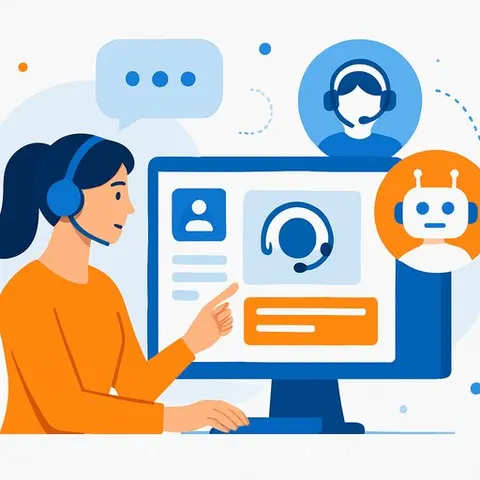
Microsoft's Contact Center Platform Aims to Unify Fragmented CX Tools
Microsoft has launched Dynamics 365 Contact Center, positioning it as a unified platform that coordinates three distinct AI agents to handle customer support end-to-end. The move directly challenges both fragmented best-of-breed vendors and legacy contact center providers, signaling a shift toward consolidated, AI-driven customer experience management.
The platform embeds purpose-built agents for self-service, agent assist, and quality management that work together to reduce handoff friction and improve outcomes. Microsoft also announced real-time voice agents within Copilot Studio, enabling speech-to-speech interactions that can reason, retrieve information, and take action without rigid scripts. These agents are integrated into Dynamics 365 Contact Center and designed to handle high-volume scenarios like billing inquiries, order management, and appointment scheduling.
Customer support ranks as the leading generative AI use case among enterprises, cited by 56% in a 1H 2026 survey of 820 decision makers. Yet most deployments remain fragmented across multiple vendors, creating integration headaches and inconsistent experiences.
The Reliability Question
Enterprises are moving past AI demonstrations and demanding proof of reliability and measurable business impact. Reliability and hallucination management top the list of adoption barriers at 55%, while 43% cite uncertainty in measuring business value.
Microsoft's coordinated agent model could reduce failure points by eliminating integration gaps between systems. The real test is whether it delivers consistent, explainable outcomes at scale and ties those outcomes to concrete metrics-cost savings, productivity gains, or customer satisfaction improvements.
Real-time voice agents introduce distinct risks. Speech-to-speech interactions compound existing AI reliability challenges: latency spikes, accent misinterpretation, and hallucinated responses become far more damaging when delivered live. Unlike text channels, voice offers no pause for verification before a response reaches the customer. Errors propagate instantly and can erode trust quickly.
Industries like financial services and healthcare face regulatory exposure. AI-generated voice interactions may trigger compliance obligations around disclosure, consent, and auditability. Maintaining consistent quality across thousands of concurrent voice sessions at enterprise scale remains unproven.
Platform Consolidation vs. Flexibility
Microsoft's unified approach presents a trade-off. Platform cohesion promises lower integration costs and faster deployment, but introduces vendor lock-in risk and potential adaptability constraints as customer experience needs evolve.
Fifty-one percent of organizations prefer a hybrid approach, balancing vendor platforms with in-house customization. Microsoft must convince buyers that its platform can evolve as fast as their requirements change.
The competitive response from AWS, Genesys, and NICE will determine whether the market consolidates around unified platforms or continues fragmenting with best-of-breed solutions.
What to Watch
- Agent Reliability Metrics: Will Microsoft's coordinated model outperform rivals on error reduction and explainability by end of 2026?
- ROI Proof Points: Can Microsoft deliver quantifiable business value in large-scale deployments, or do pilots stall at the proof-of-concept stage?
- Ecosystem Response: How quickly will competitors adapt their platforms to match Microsoft's unified agentic orchestration?
- Adoption Patterns: Will enterprises shift decisively toward platform consolidation, or does the hybrid approach remain dominant through 2027?
Early adopters of real-time voice agents should expect a period of careful tuning, aggressive monitoring, and clear fallback protocols before trusting these agents with high-stakes customer interactions.
For teams managing customer support operations, the shift toward AI for Customer Support and AI Agents & Automation is accelerating. Understanding how these coordinated agents work-and their current limitations-will be essential for evaluating whether consolidation makes sense for your organization.