
AI news ·
Most frontline workers receive no training after employers introduce AI, study finds
Six in ten frontline workers got no training after their employer introduced AI tools, per research from PYMNTS, Ingo Payments, and WorkWhile. The gap is driving job-loss fears and erasing productivity gains.
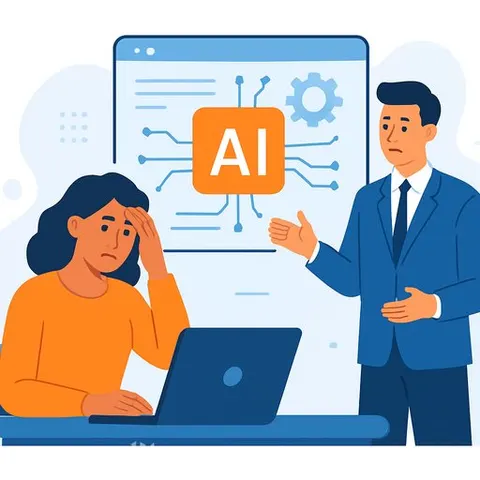
Training Gap Widens as Employers Deploy AI Without Preparing Frontline Workers
Nearly 40% of frontline workers say their employer has introduced AI tools, but 60% of those workers received no training on the systems, according to research from PYMNTS, Ingo Payments, and WorkWhile. The gap between deployment and preparation is fueling anxiety about job displacement among workers most exposed to automation.
Frontline workers express greater concern about AI-driven job loss than knowledge workers do. The difference isn't primarily about actual displacement risk-it's about communication and readiness.
Why the Training Gap Matters
When AI tools roll out without operator training, error rates climb and productivity gains disappear. Many frontline roles don't face full automation; instead, workflows become augmented with AI decision-support interfaces that require human fluency to work effectively.
Workers who lack training on these systems can't use them properly. They also can't assess whether the technology is replacing their job or changing it. That uncertainty drives fear.
The Adoption Problem
For deployment teams and managers, this finding reframes AI readiness as a workforce capability issue, not just a model-accuracy issue. Organizations that introduce AI into customer-facing or operational workflows need rollout plans that include user training, change communication, and outcome monitoring.
Without these elements, organizations fail to capture productivity benefits and create unnecessary disruption.
What Comes Next
Watch for follow-up research measuring adoption rates after training, employer investment in upskilling, and correlations between training and measurable productivity or safety outcomes. Industry trade groups and large employers may also publish guidance on AI deployment that emphasizes workforce training as a core requirement.
For practitioners building AI systems, the research points to a simple fact: deployment without preparation fails. AI productivity gains depend on trained operators, and workforce readiness requires planning from HR and operations teams.