
AI news ·
Scientists warn AI dependence in research labs risks eroding critical thinking and human collaboration
Over half of researchers now use AI for core tasks, but scientists may be losing the ability to think independently. Early-career researchers are most at risk, often treating AI outputs as fact.
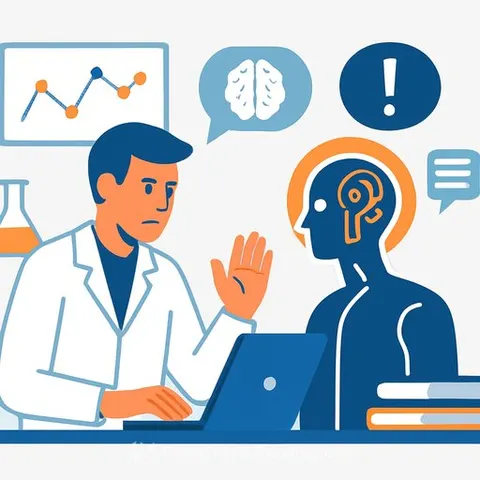
Scientists are outsourcing their thinking to AI-and research may suffer
More than half of researchers now use AI for core work tasks, from reviewing academic papers to designing experiments. Tools like AlphaFold have compressed years of protein-structure work into hours. Yet this rapid adoption carries a risk that rarely surfaces in the rush to integrate AI into labs: researchers may be losing the ability to think independently.
Early-career scientists face the greatest exposure. They are still developing their reasoning skills when they begin treating AI outputs as authoritative and outsourcing troubleshooting and critical evaluation to machines.
The confidence trap
AI responds with fluent, immediate answers. That speed and certainty can mask uncertainty. Once researchers begin assuming AI is correct, the burden of judgment shifts from human to machine.
The problem compounds in modern labs. Intense competition, long hours, and isolation create conditions where researchers feel more comfortable testing ideas with an AI assistant than with colleagues. An AI system never judges. It never competes for funding or credit. It has no ego and no office politics.
Human scientific relationships are messier. They involve criticism, hierarchy, and risk. For junior researchers, that friction can feel threatening-so they gravitate toward the patient, nonjudgmental alternative.
What gets lost
Science advances through opposing ideas, deep skepticism, vigorous debate, and rigorous mentoring. These are uncomfortable. They take time. They require relationships built on trust and willingness to be challenged.
AI companionship threatens that foundation. As researchers begin to depend on machines for validation and feedback, they skip the conversations that historically shaped scientific thinking. The critical back-and-forth that produces creative, rigorous research becomes optional.
The risk extends beyond skill erosion. Some researchers report emotional attachment to AI systems-even grief when tools are retired. That dependency can feel safer than the uncertain, sometimes adversarial relationships that define scientific collaboration.
What needs to change
Current AI safety discussions focus on model errors and jailbreaking. Those matter less than the cultural damage: how AI companionship reshapes the way scientists work and relate to each other.
Institutions pushing AI adoption should educate early-career scientists on the risks of over-dependence. Labs need benchmarks to test whether AI systems establish healthy boundaries with users. And leaders need to understand that these tools are permanent fixtures-which means learning to use them without letting them replace human judgment and mentorship.
For researchers seeking to integrate AI responsibly, AI for Science & Research learning paths can help clarify how to maintain scientific rigor while using these tools effectively.