
AI news ·
NTU develops AI biochip that detects disease biomarkers in 20 minutes
NTU researchers built an AI-powered biochip that detects disease-linked microRNA biomarkers in 20 minutes, no PCR required. A paired camera and mobile app process results in real time; clinical validation is still needed.
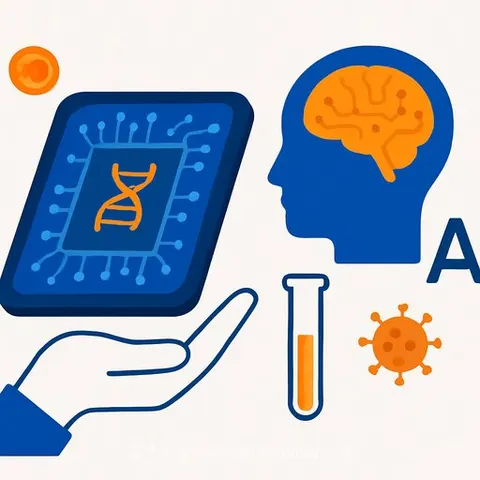
NTU Biochip Detects Disease Markers in 20 Minutes Using AI
Researchers at Nanyang Technological University in Singapore have developed an AI-enabled biochip that identifies microRNA biomarkers from a biological sample in roughly 20 minutes. The system combines a nanophotonic chip with deep learning algorithms to detect and classify thousands of microRNA signals without relying on traditional polymerase chain reaction (PCR) amplification or manual analysis.
MicroRNAs are small molecules associated with cancer, cardiovascular disease, and other conditions. Early detection of these biomarkers can inform diagnosis and treatment decisions.
How It Works
The biochip uses deep learning to automate detection and reduce the need for conventional lab methods. Researchers built a prototype that pairs the chip with a camera and mobile app, allowing results to be processed and interpreted in real time without requiring advanced laboratory equipment.
Early testing showed high sensitivity and accuracy when detecting cancer-related microRNA targets. The findings were published in Advanced Materials.
Clinical Path Forward
The university said further validation is needed before the system can be deployed in clinical settings at scale. The current prototype demonstrates how combining nanophotonics with machine learning can improve the speed and precision of biomarker detection.
The work reflects growing interest in AI for Healthcare applications that deliver faster diagnostic results. It also exemplifies the intersection of AI for Science & Research, where machine learning accelerates analysis in molecular biology.