
AI news ·
Nursing educator finds participants struggle to distinguish AI-generated text from human writing
Nursing educators in a classroom test could not reliably tell AI-written messages from human ones-and guessed wrong as often as right. The exercise challenged the assumption that AI text sounds robotic.
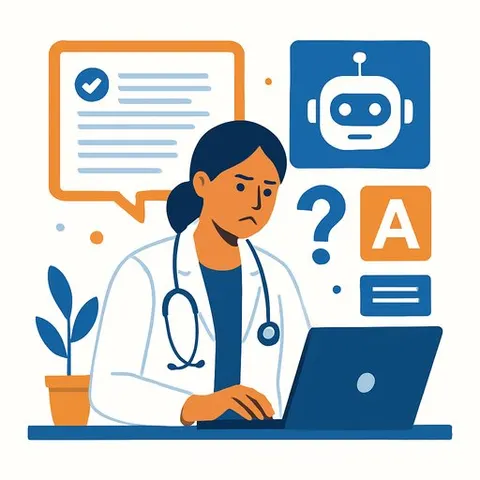
Nursing Educators Struggle to Spot AI-Generated Text
A classroom exercise at a School of Nursing exposed a blind spot among educators: most cannot reliably distinguish between AI-written messages and human ones.
Jennie De Gagne, director of the nursing education specialty, conducted the test with nursing educators. Participants wrote empathetic messages to a fictional student group disappointed by a grade. An AI system then generated a parallel message. Both were posted without labels, and classmates guessed which was human.
The results were telling. Experienced educators guessed wrong as often as they guessed right. Two of three AI models tested also failed to identify which message came from a human.
What the Messages Revealed
The human-written message used specific details-late-night Canva sessions, discussion board exchanges, a reshot demo video. It acknowledged the grade slip but framed it in context: a 2.25-point dip in the final score. The tone was warm and personal.
The AI message was measured and professional. It praised teamwork and acknowledged effort. It identified the specific rubric gap-inclusivity considerations and technology integration-and positioned the mistake as a learning opportunity.
Neither sounded obviously artificial. The AI message didn't drone or repeat jargon. The human message didn't ramble or lose focus.
The Assumption That Failed
De Gagne said the exercise exposed "an untested assumption: that effusive emotion sounds human and measured professionalism sounds like a machine."
The real finding was simpler. Familiarity with AI matters less than the habit of checking assumptions before judging. That applies whether educators are reading student work, designing lessons, or practicing their profession.
For nursing educators, the stakes are concrete. If they cannot identify AI-generated text, they cannot fairly assess student work or understand how students are using these tools. If they assume AI sounds robotic, they may miss when students submit AI-generated assignments.
Moving AI Into Nursing Education
De Gagne has spent years building frameworks for using AI in nursing education in ways aligned with professional nursing values. She has facilitated conversations among nurse educators globally and created resources to make nursing-specific AI tools accessible.
The classroom exercise was one experiment. Others have involved direct use of AI in teaching and course design. The common thread: treating AI as a tool that requires understanding, not fear or blind trust.
Educators interested in practical applications should explore AI Learning Path for Teachers, which covers classroom tools and lesson planning strategies applicable to nursing education.