
AI news ·
Pennsylvania farmer rejects $15.7 million data center offer, opts for conservation deal instead
A Pennsylvania farmer turned down $15.7 million from data center developers-roughly $60,000 per acre-to accept a $1.9 million conservation easement that permanently blocks commercial development on his 261-acre farm.
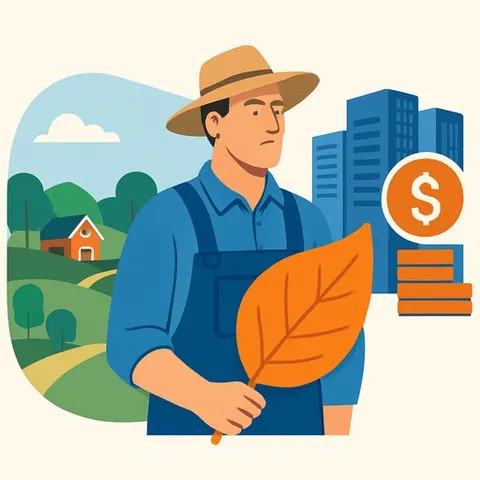
A Pennsylvania farmer rejected a nearly $15.7 million offer from data center developers for his 261-acre property, choosing instead a $1.9 million conservation easement that permanently blocks commercial or industrial development on the land. The decision, reported in September 2026, highlights a growing tension between the rapid expansion of AI infrastructure and rural landowners who are refusing to sell at any price.
The deal Mervin Raudabaugh walked away from
Mervin Raudabaugh's property in Pennsylvania drew an offer worth roughly $60,000 per acre from developers planning an AI data center. He turned it down. Instead, Raudabaugh accepted a voter-backed preservation program deal that pays about $7,200 per acre and places the land under a conservation easement. He retains ownership and can sell the farm in the future, but the land cannot be used for anything beyond agriculture.
The gap between the two offers - roughly $13.8 million - shows what developers are willing to pay to secure sites for the large-scale facilities that house servers, networking gear, cooling systems, and backup power for AI workloads. Some of the largest data centers in the U.S. now span hundreds of acres. Colossus 2 in Shelby, Tennessee, built by xAI, occupies 100 acres with a 1-million-square-foot building. Riot Platforms Rockdale in Texas sits on 200 acres with 430,000 square feet of computing space.
Other farm families are also saying no
Raudabaugh is not an isolated case. In April 2025, a Kentucky family with a 1,200-acre farm turned down a $26 million offer for half their land - more than $43,000 per acre in an area where land averaged $6,000 per acre. The buyer was anonymous. The family said they would not be the reason their multi-generation farm became a data center. Other families in the area did sell, and the community is now pursuing rezoning to block data center construction.
For professionals in AI for Real Estate & Construction, these cases signal a shift in land-use negotiations. Traditional valuation models based on comparable sales may not capture what developers are actually putting on the table - or what landowners are willing to sacrifice to keep their property intact.
What data centers demand from a site
AI data centers require large contiguous parcels, often hundreds of acres, to house the physical infrastructure behind machine learning and large language models. Beyond the building footprint, the facilities need space for generators - sometimes thousands of them - that can be the size of rail cars. These generators produce noise and can affect local air quality, concerns that fuel community opposition in rural areas.
Developers are competing for land near transmission lines and water access, driving per-acre offers far above agricultural market rates. The pressure is particularly acute in regions where local governments are courting data center investment while residents organize against it.
Why this matters for real estate and construction professionals
Land acquisition for data centers is reshaping rural real estate markets, creating valuation gaps that brokers and appraisers need to understand. A parcel worth $7,000 per acre for farming can suddenly draw offers ten times that amount from tech developers - but only if the seller is willing. Conservation easements, rezoning efforts, and community pushback are becoming deal-level risks that alter site selection timelines and costs. Brokers who can navigate both the financial incentives and the local political dynamics will have an edge as this sector expands. For those building expertise in this area, the AI Learning Path for Real Estate Brokers covers property analytics and lead generation strategies applicable to complex land deals.