
AI news ·
People value human-made art more when they know AI made the alternative, research shows
People rate the same writing lower when told AI wrote it, even if they can't spot the difference. Researchers call this the "AI disclosure penalty," found consistently across 16 experiments.
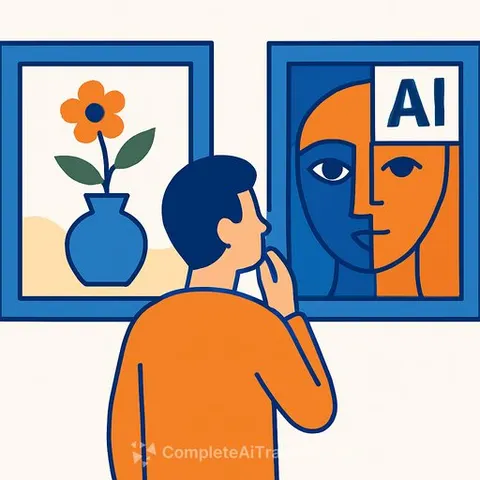
Why People Devalue AI-Generated Writing, Even When It's Good
Research shows audiences consistently prefer human-created writing over machine-generated work-even when they can't tell the difference. A series of 16 experiments found that simply disclosing AI authorship causes people to rate the same content lower. The effect is so reliable researchers call it the "AI disclosure penalty."
The finding challenges a common assumption: that people judge creative work purely on quality. They don't. When audiences learn a poem or essay came from an algorithm, perceived value drops sharply.
What Veblen Got Wrong About Value
In 1899, economist Thorstein Veblen used the example of two identical spoons to explain how we assign worth. One was hand-wrought silver; the other, mass-produced base metal. Most people valued the handmade version more-not because it worked better, but because it signaled wealth and required human skill.
Veblen assumed we prize things for beauty or cost. He underestimated a third factor: the labor itself. We value human creations partly because they embody deliberate effort and expertise. A machine can produce a technically competent poem in seconds. A human poet may spend weeks wrestling with language, emotion, and form.
When an algorithm generates a story about heartbreak or an essay on struggle, it trades in emotions it has never experienced. AI has never felt pain, suffered loss, or stared at a blank page in frustration. That absence matters to audiences, even if the output reads smoothly.
The Cost of Effortlessness
John Milton believed writing cost him his eyesight. James Joyce held the same conviction. John Keats feared the emotional toll of poetry would worsen his tuberculosis and shorten his life. They wrote anyway.
People resent machines partly because their creations cost them nothing. There is no vulnerability, no risk, no skin in the game. Art requires stakes. When those stakes disappear, so does the meaning.
Many creatives share a deeper instinct: they want machines to handle laundry and dishes so they can make art. Not the reverse. We accept machines stamping out car parts because efficiency is the goal. Applying that same logic to human expression strips away the very qualities that make art matter.
Human Labor Becomes Scarce (and Valuable)
The media economy already squeezes creators. Streaming services pay pennies per view. Direct payment for content is optional. Now companies push tens of thousands of AI-generated posts, videos, and podcasts daily-often encouraging artists to use AI to pump out more volume.
Much of this output is formulaic slop: clichés and filler designed for doomscrolling and immediate forgetting. Despite this deluge, many journalists, artists, and writers earn livings because audiences choose to support human creators.
The "AI disclosure penalty" reveals something crucial: consuming art involves more than aesthetic judgment. It requires connection with another person's effort and labor.
Consumers have long paid premiums for goods labeled "handmade," "artisanal," or "bespoke." The Industrial Revolution transformed hand-woven textiles into markers of authenticity. The same shift is happening now with intellectual and creative work.
As AI turns writing and art into instantly replicable outputs, human cognitive effort is becoming an artisanal good. Audiences are placing a premium not on flawless execution-machines can do that in seconds-but on the invisible friction, lived experience, and deliberate toil behind the work.
In a market saturated with instant content, verified human effort is shifting from a baseline expectation to a highly coveted quality. What audiences ultimately value about art is not perfection. It's the connection to another human being.
For more on how AI is reshaping creative work, explore AI for Creatives and Generative AI and LLM Courses.