
AI news ·
Princeton ends unsupervised exams after 133-year tradition amid AI and doxing concerns
Princeton ends its 133-year tradition of student-run exams; faculty will proctor starting July 2026. A survey found 44.6% of seniors knew of unreported honor code violations.
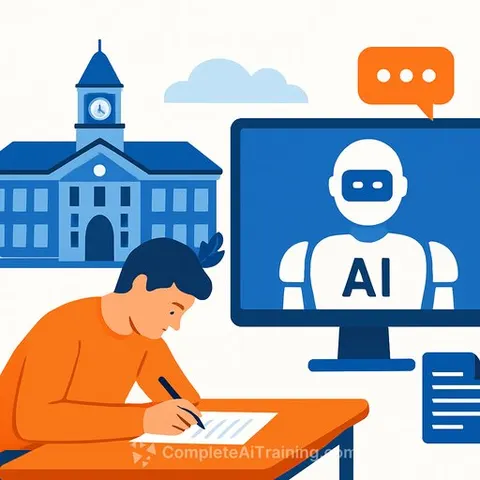
Princeton University is ending its 133-year-old tradition of unsupervised, student-run exams. Beginning July 1, 2026, the university will require faculty to proctor all in-person tests - the most significant overhaul to its honor code since it was adopted in 1893. The decision, outlined in a memo from Dean of the College Michael Gordin, responds to the dual pressures of generative artificial intelligence and a climate of doxing that officials say has made the student-run system unworkable.
Gordin wrote that generative AI "significantly" lowers the barrier to gaining an unfair advantage during exams. He also pointed to a growing reluctance among students to report misconduct openly - a pattern he attributed to social media and fear of being shamed or doxxed among their peers.
Technology erodes student-run enforcement
"The ease of access of these tools on a small personal device have also changed the external appearance of misconduct during an examination, which is much harder for other students to observe (and hence to report)," Gordin wrote in the memo. He added that anonymous reports to the Honor Committee have risen, but anonymity has made it difficult for the committee and the dean's office to follow up on suspected cheating.
A 2025 survey by The Daily Princetonian found that 44.6% of seniors said they knew of honor code violations they chose not to report. The same campus newspaper reported that a majority of undergraduates were either in favor of or indifferent to the change, though a "sizable minority" opposed it.
Faculty observers will report, not enforce
Under the new rule, proctors serve as witnesses during exams. They will not intervene directly but will note suspected violations and report them to the student-run Honor Committee, which retains full authority to adjudicate cases. "The procedures of the Honor Committee, and the due process protections and rights to appeal of those brought before the committee, do not change," Gordin said.
Proctors who report a suspected violation are expected to be available to testify before the committee. The university expects to finalize the number of proctors required and their operational practices before the fall 2026 semester begins.
Other honor code models face similar pressures
Princeton is not alone in reexamining its code. Haverford College, which introduced its own honor code in 1897, updated it most recently in fall 2025. Haverford's system emphasizes final projects over timed exams and includes a social component that asks students to uphold the dignity of all community members. The University of Virginia's honor code, which forbids lying, cheating, and stealing, was revised in 2023 to allow alternatives to expulsion, the sole sanction for more than a century.
Why this matters for education professionals
The end of unsupervised exams at Princeton is a clear signal that even institutions with deep-seated traditions of student self-governance are now treating AI-driven cheating as a structural problem, not a behavioral blip. For K-12 and higher education leaders, the shift underscores the urgency of rethinking assessment design and faculty training. Policies that assume peer monitoring will catch misconduct are fast becoming obsolete. As institutions navigate these changes, AI for Education resources and professional development on generative tools are likely to become staples of academic integrity planning. The Princeton case shows that the response to AI isn't just about detection software - it's about fundamentally altering who is responsible for oversight in the exam room.