
AI news ·
Reed Hastings says abandoning the 'sage on the stage' model is key for AI to double learning
Reed Hastings argues AI can only transform education if schools ditch the "sage on a stage" model. He's funding a project to prove AI tutoring can deliver twice as much learning per year.
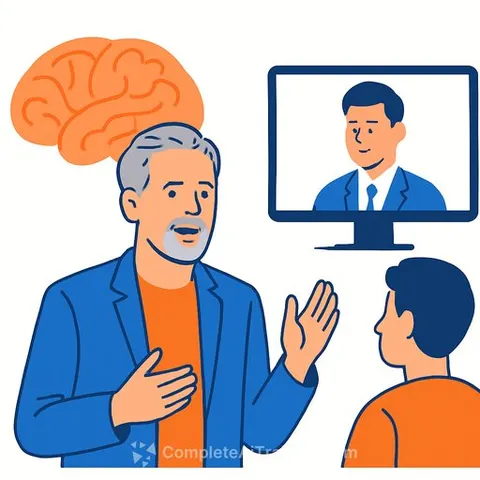
Reed Hastings, former Netflix CEO and a decades-long education reformer, argues that AI will only deliver on its promise if schools abandon the traditional "sage on the stage" model. His past work-from chairing the California State Board of Education to investing in charter schools and ed tech-left him convinced that layering technology onto existing classroom structures produces only marginal gains. The real opportunity, he told a live audience at the ASU+GSV Summit, is to use AI to power individualized, mastery-based learning where students learn directly from software, freeing teachers to focus on social and emotional development.
From steam engines to the grammar of schooling
Hastings likened current ed tech efforts to early factories that replaced a steam engine with an electric one but kept the same system of belts and pulleys. "The real productivity of the factories didn't change," he said. "People started saying, hey, the power distribution system, all those pulleys and rods spinning, that's the problem." In education, the equivalent is the teacher-centric classroom. "We're putting tech into the classroom and the classroom, the sage on a stage, is the power distribution system. The sage on a stage is holding back technology from its natural effects and its ability to teach children directly."
His two decades with charter networks such as KIPP showed him that even successful models yield "grindingly slow" progress. Ed tech like DreamBox Learning, where he was an investor, ran into similar friction when school districts asked to disable features that let students work ahead. "Catching kids up to make the machine work better, very much valued. Letting kids get ahead, which sort of threw sand in the machine, not valued," he said. These experiences, he said, revealed the "depth and strength of the grammar of schooling."
Individual tutoring as the benchmark
Hastings pointed to Benjamin Bloom's 40-year-old finding that one-on-one tutoring could produce a two-sigma improvement in learning. He is now funding a project to replicate that at scale, giving 50 randomly chosen students a full year of individual tutoring to measure just how much faster a typical 7-year-old can learn. "I suspect that we'll find that it is twice as much" learning per year, Hastings said. "By the time you get to eighth grade, you know as much as a typical high schooler today."
That pace sets a target for AI developers. He cited chess as a working example: since AI-based tutoring became widely available, the average 10-year-old's chess rating has risen sharply on stable scoring systems. "What's happening is the 10-year-olds are getting tutored by AI. So that's true for chess today and could be true for biology and history tomorrow." The goal is a school day where individualized tutoring replaces whole-class direct instruction, while all other activities-play, projects, social interaction-remain intact. The teacher shifts to a role focused on social-emotional learning and classroom culture.
Advice for ed tech entrepreneurs
For founders building AI for Education, Hastings drew a clear line between short-term revenue and long-term impact. "If you want to make money selling to school districts, make teachers' lives easier," he said. "If you want to change the world, focus on the homeschoolers. Focus on people who are able to go at their own pace and build systems that are individualized." As the learning gains become undeniable-not 5 percent improvements but twice the learning-district adoption will follow, he predicted. The advice parallels self-driving car development: most of the market is building driver-assistance tools, but the breakthrough product is the one that drives itself.
Global impact in Rwanda
AI's portability means that when effective teaching software is built, it can reach places that models like KIPP or Success Academy cannot. Hastings is backing a project led by CJ, also at the summit, to test one tablet per child in Rwanda. "If that works as we hope, we'll see Rwanda rise to be the most successful education state, first in Africa, maybe in the world," he said. The software and hardware combination would then serve as a proof of concept for scaling mastery-based learning globally.
Why this matters for educators
The vision sketched by Hastings does not eliminate the educator's role-it redefines it. In an AI-driven classroom, a teacher's core work moves from delivering content to developing students' social and emotional skills, facilitating projects, and building a supportive community. For those preparing to work in that kind of environment, gaining familiarity with AI tools and personalized instruction models is not a distant prospect; it is the direction the puck is moving. Teachers and school leaders who explore resources such as an AI Learning Path for Teachers can start building the skills to thrive in classrooms where software handles the direct academic instruction and adults focus on what humans do best.