
AI news ·
Regulators develop new frameworks to govern autonomous AI in healthcare
Regulators in four regions are drafting rules for autonomous clinical AI. This shift to independent medical action creates new patient safety and liability risks.
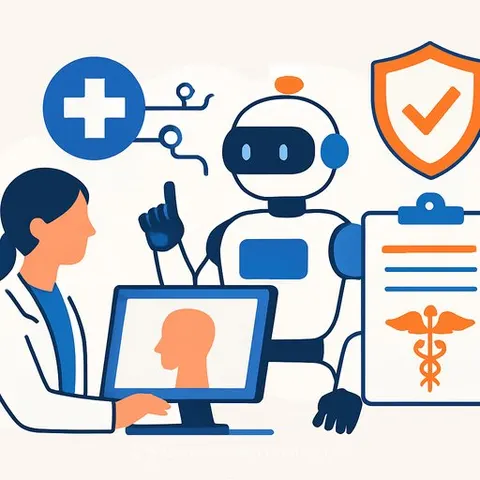
Regulators in Israel, the United States, Canada, and the European Union are actively developing frameworks to govern autonomous AI systems that can make clinical decisions with limited human oversight. The shift from AI that advises clinicians to AI that acts independently is no longer theoretical-it is already appearing in pilot programs, including an Israeli regulatory sandbox testing autonomous pregnancy ultrasound assessments and AI-supported heart failure management. For healthcare professionals, this evolution raises immediate questions about patient safety, accountability, and the reliability of machine-driven decisions.
The leap from clinical support to autonomous action
Most healthcare AI today functions as clinical decision support, flagging suspicious lesions, prioritizing patient lists, or catching drug interactions while the clinician remains responsible for the final call. Autonomous systems go further: they may recommend treatments, adjust medication regimens, interpret diagnostic tests, or trigger remote interventions without waiting for human approval. This promises to ease workforce shortages and extend capacity, but it also introduces risks that current medical device regulations were not designed to handle.
When AI makes a mistake
Human clinicians make errors, but they can usually explain their reasoning. Many advanced AI models operate as "black boxes," producing outputs that even their developers struggle to interpret. If an autonomous system fails to detect clinical deterioration or recommends an inappropriate treatment, tracing the root cause becomes difficult. This opacity can mask subtle errors that a clinician might otherwise catch from a colleague.
Excessive reliance on automation can also breed automation bias, where healthcare workers become less likely to challenge machine-generated outputs. Compounding the problem is the quality of training data. Datasets often skew toward specific populations, meaning an algorithm trained largely on one demographic group may underperform when applied to others. Differences in ethnicity, socioeconomic status, geography, and age all influence model accuracy. An AI validated in North America or Europe will not automatically perform to the same standard elsewhere, and a single flawed algorithm can replicate the same mistake across thousands of patients-a risk far greater than isolated human error.
The accountability gap
When a physician makes a poor decision, established frameworks determine responsibility. When an autonomous AI system contributes to patient harm, the lines blur. Is the clinician who relied on the software accountable? The hospital that deployed it? The developer? What if the algorithm changed after its original approval? Regulators including the U.S. Food and Drug Administration and Health Canada are exploring predetermined change control plans to manage ongoing modifications while maintaining oversight, but no clear consensus has emerged.
Why cybersecurity risks multiply
Healthcare already ranks among the most targeted sectors for cyberattacks, and autonomous AI expands the attack surface. Adversarial attacks can manipulate AI inputs in ways imperceptible to humans, potentially corrupting diagnostic algorithms or patient monitoring systems. As care becomes more connected through wearables, smartphones, and cloud platforms, a compromised autonomous system could disrupt patient care at a scale beyond traditional software failures.
Why this matters for healthcare professionals
The World Health Organization has stressed that AI should support human wellbeing while respecting transparency, accountability, and human rights. Human clinicians bring contextual understanding, ethical judgment, and empathy-qualities algorithms cannot replicate. For professionals working with these tools, the challenge is knowing where human involvement is essential and where automation can safely improve efficiency. Practical training in AI evaluation, risk management, and human factors is becoming as critical as clinical expertise. Healthcare professionals can build this foundation through resources like AI for Healthcare Courses, which cover the technical and safety considerations needed to work with autonomous systems responsibly.