
AI news ·
Robinhood lets AI agents trade stocks on behalf of investors
Robinhood now lets customers deploy AI agents that buy, sell, and rebalance stock portfolios automatically. The company warns agents can misinterpret instructions or act on outdated data, placing responsibility on users.
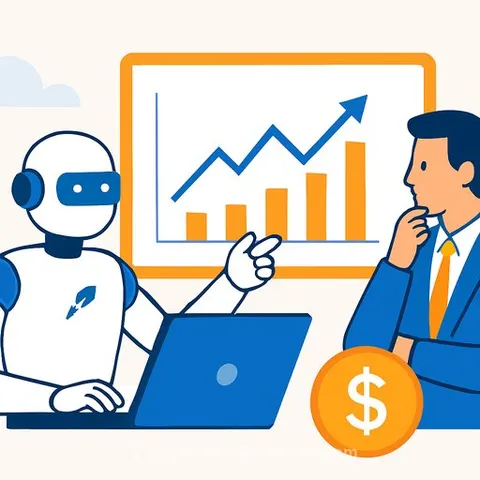
Robinhood Lets AI Agents Trade Stocks on Your Behalf
Robinhood opened its platform to AI agents on Wednesday, allowing customers to deploy autonomous systems that buy, sell, and rebalance portfolios without manual intervention. The move puts Robinhood alongside Amazon, Google, and startups in a widening race to embed AI into financial transactions.
Customers can now direct agents to analyze portfolios for concentration risk, identify underweight positions, and rebalance holdings automatically. Active investors can set criteria for buying or selling after specific events-an analyst upgrade, a price threshold hit, or market moves. The launch covers stocks only for now, though the company plans to extend agents to crypto, futures, and options.
What This Means for Finance Professionals
Agentic AI is moving beyond chat interfaces into the actual execution of financial decisions. Coinbase offers similar tools for trading and lending crypto. Public.com lets investors convert an idea into a backtested index or execute trades via text prompts like "buy the close and sell the open for up to $5,000 of a Nasdaq 100 ETF." Some ChatGPT users can now connect the chatbot directly to financial accounts for real-time insights.
The same pattern is playing out in consumer shopping. Robinhood introduced an "agentic credit card" that automatically purchases limited-edition items or books restaurant reservations when availability opens. Google launched a "universal cart" that crawls the web for price drops on saved items. Amazon released "Alexa for Shopping," a more capable assistant for automated purchases.
Bank of America CEO Brian Moynihan signaled the direction during the company's earnings call last month, saying the future involves "more agentic versus prompt, more built into the process rather than have it be delivered by teammates doing something."
The Risk Question
Robinhood's disclosures acknowledge that "AI agents can make errors, misinterpret instructions, act on incomplete or outdated information and may behave in unexpected ways." The company places responsibility on customers for how their agents perform, since Robinhood only enables the tools.
For finance professionals, the practical question is straightforward: as these systems handle more transactions autonomously, oversight becomes critical. The technology can execute faster than manual review, but error correction happens after the fact.