
AI news ·
Sacramento Bee journalists protest McClatchy's use of AI to rewrite their work
Over 30 Sacramento Bee journalists are refusing bylines on AI-generated stories after McClatchy used their reporting to create new content. An Idaho Statesman AI error falsely reported a brewery closing, tanking its sales.
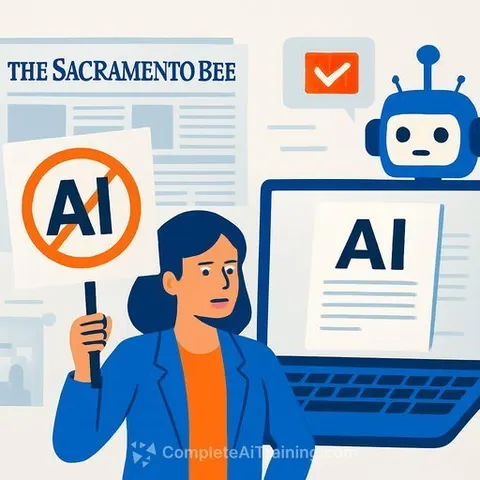
McClatchy Papers' AI Tool Sparks Newsroom Revolt Over Byline Use
More than 30 journalists at the Sacramento Bee are refusing to let their bylines appear on stories generated by McClatchy's artificial intelligence system. The reporters sent a letter to management on March 27, objecting to the news chain's practice of creating new articles from their existing work.
McClatchy owns The Miami Herald, The Charlotte Observer, The Kansas City Star, and The Fort Worth Star-Telegram. Its generative AI product creates new pieces for "target audiences," produces video scripts, and generates newsletter versions of stories-all derived from reporters' original reporting.
The newspaper's executive editor met with union leaders on April 1 and confirmed that AI-generated stories would not carry reporters' names. The journalists argue the tool undermines their work and erodes public trust.
"It's a betrayal of the public's trust," said Ariane Lange, vice chair of the union at the Sacramento Bee and an investigative reporter.
But the reporters face a bind. McClatchy's chief of staff said the company would use journalists' reporting for AI regardless of whether their bylines were attached.
Prior Damage at Other McClatchy Papers
The conflict reflects real consequences from AI integration at McClatchy outlets. In 2025, the Idaho Statesman used AI to falsely report that a local brewery was closing. The story caused the business's sales to plunge.
The union at the Idaho Statesman authorized a strike in response. Ninety percent of union workers signed on, citing McClatchy's AI spending as a drain on journalist wages.
For writers navigating generative AI and LLM tools in professional settings, these disputes highlight the stakes of how AI-generated content is attributed and deployed. Understanding how AI for writers operates in newsrooms can help you protect your own work and reputation.